To Believe in an Omen

Today is one of those holidays us California government employees get that nobody else does.  Cesar Chavez Day, to honor a man who was the Martin Luther King, Jr., for migrant farmworkers.

A day off when nobody else has it off opens up a lot of possibilities.  I got some things out of the way yesterday (laundry, planting the vegetable garden) so I could have this day free of obligations.  As I said to the family, “It’s a day off.  I want to be able to do whatever I want instead of having to do something.”

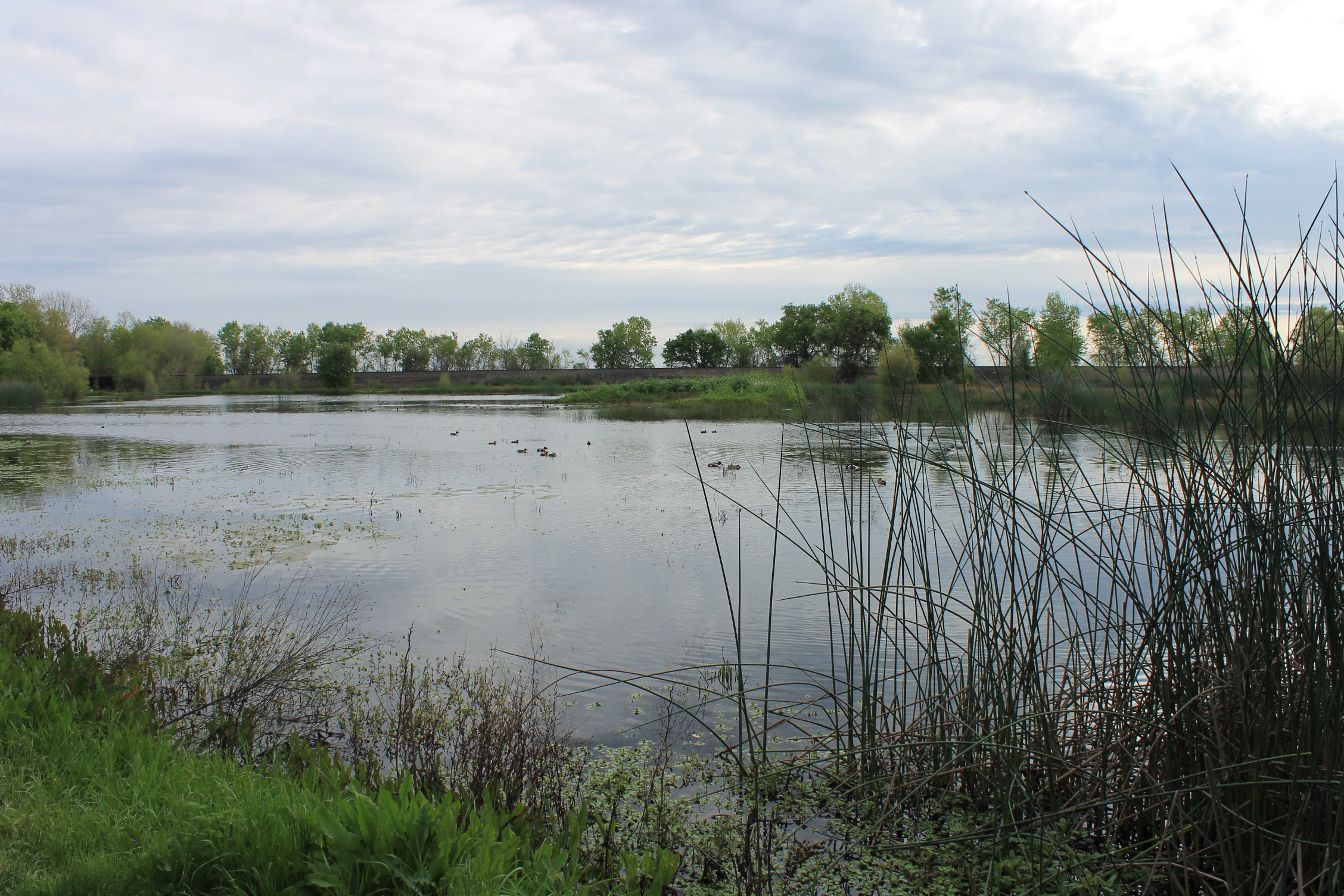
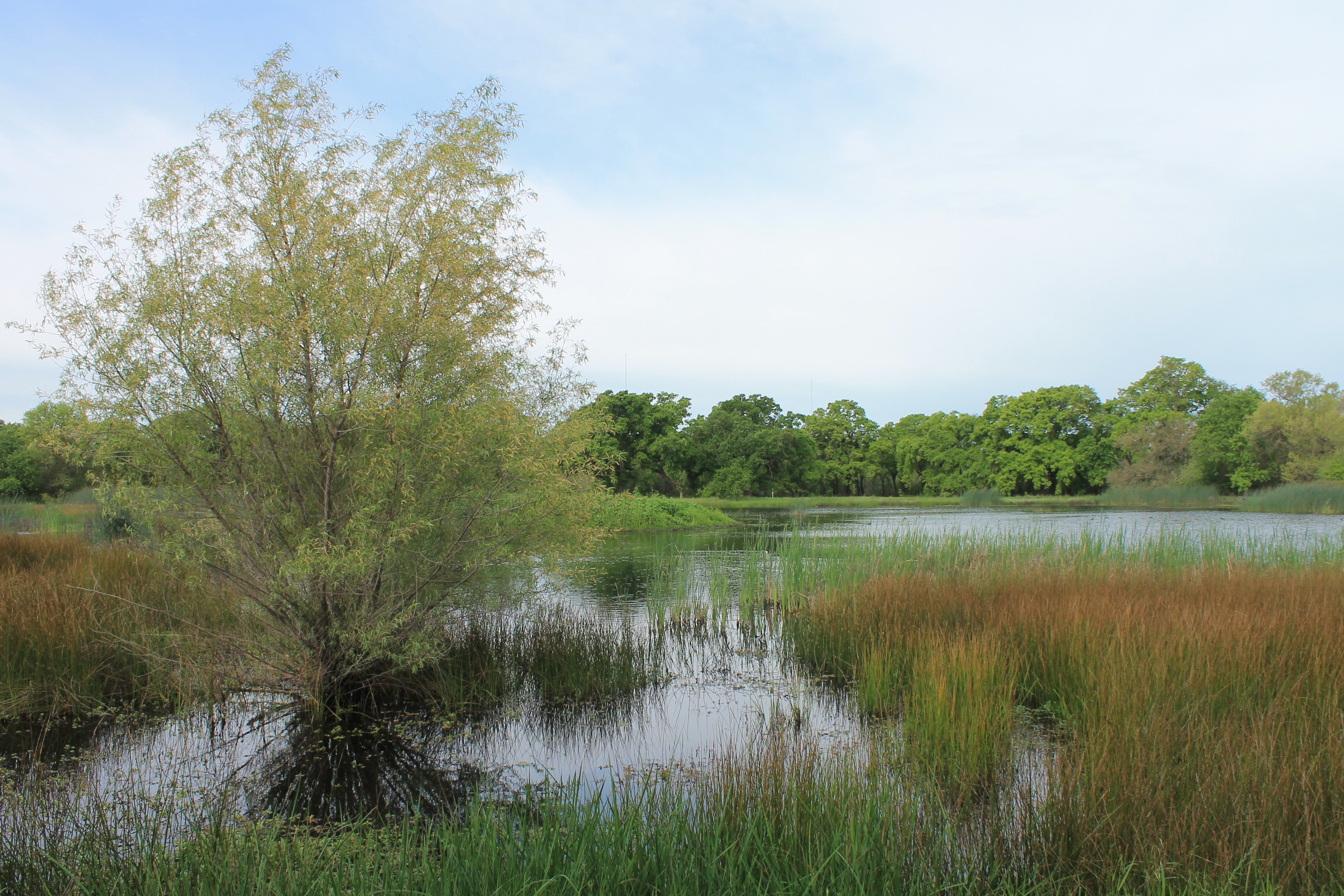
So, I started the day off with a short drive to the Cosumnes River Preserve.  More than 50,000 acres of sloughs, rivers, creeks, bogs, trees, and wildlife, with trails winding through it all.  It’s a nice piece of nature so close to home.

IMG_3384

IMG_3400

There are ducks.  Lots of ducks.

IMG_3411

IMG_3412

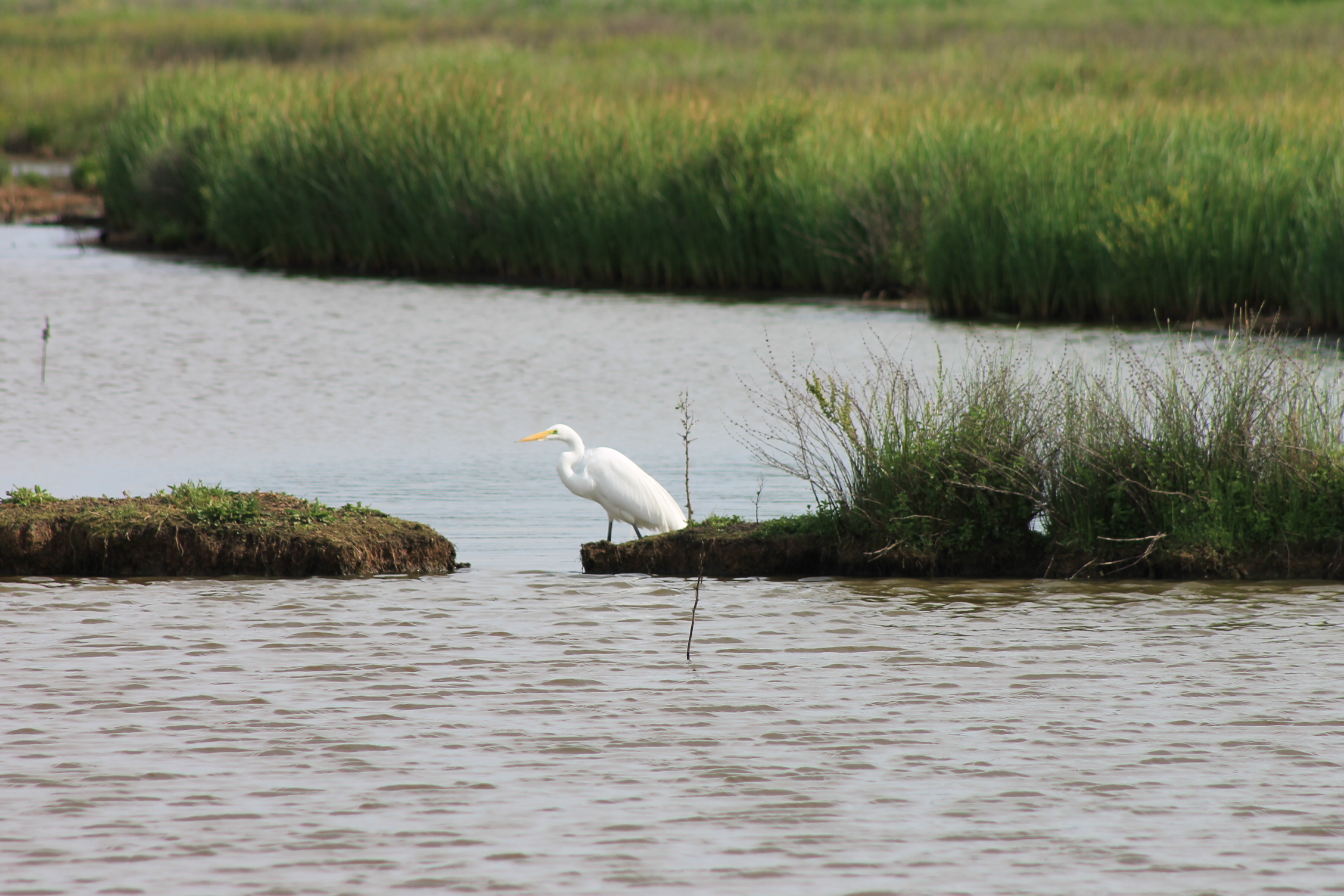
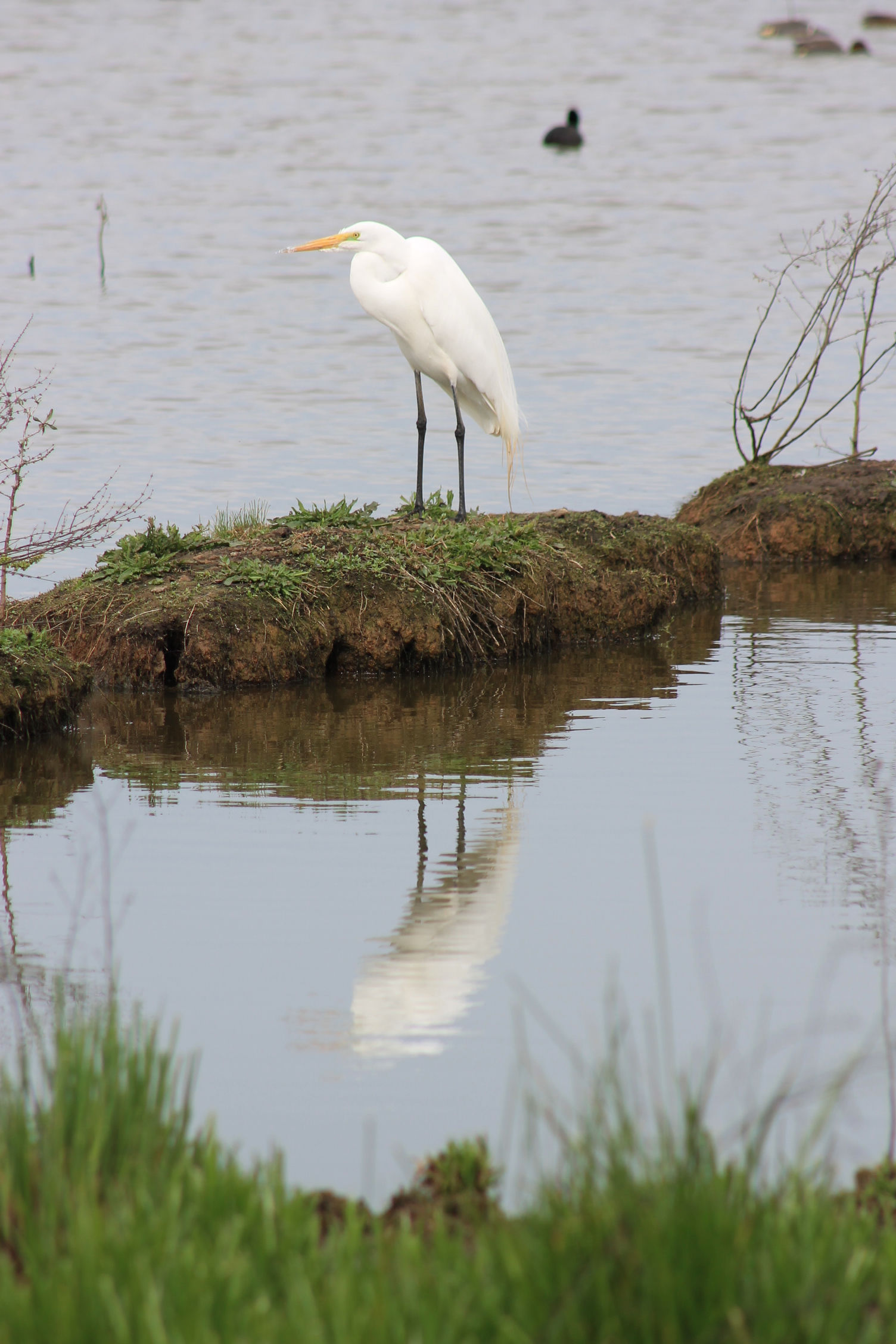
The preserve is divided by a two lane country road.  I spent an hour on the east side and realized that I was missing something there.  There are lots of times when I drive around the countryside that I see white herons (aka great egrets).  Something attracts me about them.  They don’t wander the world in flocks.  Or at least don’t appear to.  It seems whenever I see one, that is all that I see.  A lone bird in a meadow or along the edge of a river or creek.

I didn’t see any on the east side.  I wandered over to the west side, where there were many more large pools of water filtering through the sloughs.  Lots more ducks.  And, then I saw him.

IMG_3421

I spent some time watching him.

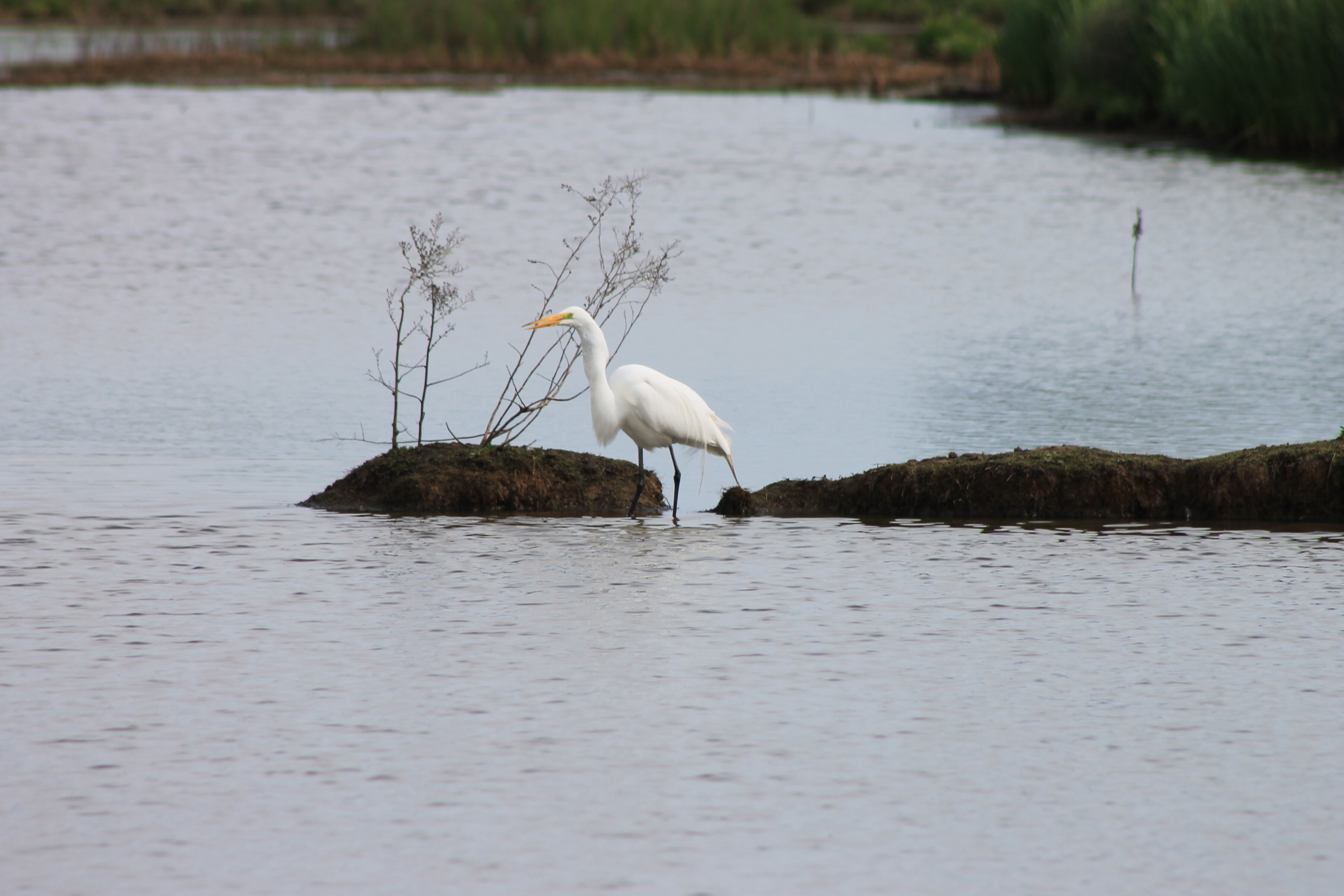
IMG_3429

Guess what he’s doing there?  Unfortunately, I didn’t get a picture of the capture, but I did get a picture of the aftermath.

IMG_3432

Yep, the white heron was hunting a mouse.  And here’s his smug look after he swallowed it.  Whole.

IMG_3441

What you ask has this to do with an omen.

Over two and a half years ago, a fellow writer had the following to say about what he had done that morning , “Spent the morning staring at the water on Mobile Bay and watching a Blue Heron fishing.”  There was something about that image that lit something in me, a story about an old man living alone on the edge of bay, more happy with the company of a whooping crane than with the people who insist on crowding him, more happy being alone than being reminded of the wounds of his past.  The Irrepairable Past is what developed from the idea.  It’s half way done, but I haven’t touched it since last summer.

A couple of weeks ago I finished Northville Five & Dime.  I was already to move back to The Irrepairable Past, a story where a whooping crane plays a small but critical role.

I looked out over the bay, calm now in advance of the evening’s approach.  The sun burned at the horizon’s edge, an eerie half ball of fire sending ribbons of orange turning to red and purple through the cotton ball clouds dotting the sky above the water.  Near the shore, a whooping crane herked and jerked as it sought its nightcap in the shallows.  Bob, as I’ve come to call the crane, and I have an understanding.  With the sun that rises and sets, and the breeze that comes in off the lake and the sound of the whippoorwills that announce the coming of night, Bob honors me with his presence.  I have yet to figure out what I provide him in return.

Then beta readers started reading Northville and I got the idea that maybe there was more story to tell there.  As a result, for the past 2+ weeks I’ve been paralyzed, torn by what to do.  More Northville or a return to the shores of Sullivan Bay, where Bob awaits.

I’m choosing to look at this morning’s trip and the presence of the White Heron (yes, I know it’s not a whooping crane, but what I saw this morning was almost exactly what is in my mind’s eye when I imagine Bob herking and jerking in the shallows of Sullivan Bay) as an omen.  The rest of the story in Northville will have to wait.  It’s time to head back to Sullivan Bay.  Henry Thornton’s tale needs to be told.

IMG_3466


Posted in Uncategorized | Tagged , , , , | 16 Comments

There Are No Rules!!!

Except for those that work for you.  Well, except for one.

I’ve been doing this fiction writing thing for a little over ten years now.  I’ve been to two writing conferences.  The first was way back at the beginning of my writing odyssey.  Dorothy Allison, who is most known for writing Bastard Out of Carolina, spoke during lunch the first day.  Great talk and she’s the one that gave me the line about writers stealing people.

The other thing I took away from the conference was this.  During one of the sessions a woman kept asking questions like, “I’ve heard you shouldn’t change voice in the middle of a chapter.  That if you change voice, it should be a new chapter.  What’s the rule?”  To which the writer, whose name escapes me, kept saying, eventually with a sigh, “There are no rules except to write a good story.  If you do that, nothing else matters.”

Which is why I bristle at things like this.  A blogger posted her 20 favorite writing rules from Stephen King’s On Writing.  A book I read a long time ago, even before I started writing myself.  Back in the day when I wanted to read everything he wrote.  But I won’t ever read it again.  Or anything like it.  Here are rules 10, 11 and 12 from that blog post:

10:  “The first draft of a book – even a long one – should take no more than three months, the length of a season.”

11:  “I stayed physically healthy and I stayed married.”

12:  “Whether it’s a vignette of a single page or an epic trilogy like ‘The Lord of the Rings,’ the work is always accomplished one word at a time.”

Does anybody else see the problem with these three rules in combination?  Anybody?  Bueller?

OK.  Here’s the draw back to blogging.  It’s impossible to have a conversation like that.  I’d love to hear from you before I answer my own question, but, hey there’s only so much time in the day and I need to get back to my story and write it … one word at a time.  Sigh.

Stephen King’s rules work for … Stephen King.  They don’t work for anybody else.  They certainly don’t work for us poor shleps who have a day job because they haven’t come up with the formula he came up with all those years ago that lead to his ability to turn out book after book after book and make millions off each one of them.  Because, let’s be serious, this is what Mr. King does.  He follows a formula, particularly over the last twenty years or so.  The same set of characters, the same basic dynamic, the same … well, just about everything.  It’s easy to write a draft in three months when you keep writing the same thing over and over again.

And since he’s made his millions, he doesn’t have to work.  In fact, I’m willing to bet it’s been about forty years since he actually had to work a day job to support his family and try to squeeze writing into the tiny window most of us have.  It’s easy from his perch to spout his rules.  But they don’t work for anybody who isn’t him.  Or Dean Koontz.  Or John Grisham.  Or Nicholas Sparks.  Or <fill in the blank with whichever author you love who has been able to make a living at it>.

Let’s go deeper.  Virtually every novel King has published over the last 20 years, or more, has been a monstrosity.  150,000-200,000 words.  And he suggests that the first draft of each of those novels — for him to qualify as a writer — had to be complete within three months.  Think about this, people, that’s a NaNo, or more, each and every month for three straight months.  And considering that during much of his career, he has published a novel every year and lately much more than that each year, he not only is writing the equivalent of a NaNo each month but also editing and re-writing the draft that he completed three months previously, and finalizing the draft he completed six months previously. And then doing interviews and promos and who knows else for the one he completed nine months ago and has now just published.  And, in the midst of all of this, he continues to write short stories.  Ummm, yeah, right.

And, he’s doing all of this … one word at a time.

And, he’s exercising so he can stay physically healthy.

And, apparently, doing what he can to keep his marriage healthy and whole.

There are no rules … except for those that work for you.  Here’s what works for me.  I can’t take the NaNo approach.  It leads to, sorry for the image, but diarrhea writing.  I simply can’t do that.  I edit as I write.  I think as I write.  I think in the darkness and in the light.  I think in the wee hours and late at night.  I think while sitting with my family and while in meetings at work.  I go back twenty pages and edit.  I go back 100 pages and re-write.  I flip this and switch that.  I do all of this as I’m writing my “first draft.”  For the most part, by the time I have finished my “first draft” I have also finished my final draft.

As a result, other than short stories of up to a couple thousand words, there is nothing I have written that has only taken three months.  Bridgeport took a year.  Then another year to completely re-write.  Weed Therapy took two years.  Northville took a year from start to finish.  No, I wasn’t spending that entire year writing that particular story.  I completed Deviation during that time.  I wrote a number of short stories during that time.  And what I also did was spend a lot of time thinking and noodling over the thing.

There are no rules … except for those that work for you.  And, the basic and fundamental rule.  Write a good story.  And, the corollary to that … do it the way it works for you.

Posted in Uncategorized | Tagged , , , | 2 Comments

Northville!!!

I learned something from Pete that summer.  I wasn’t the ugly duckling I thought I was.  I was more than my legs, more than my wheelchair.  There was something inside me that a guy could find beautiful.  When Joey asked me to the dance, I knew he meant it.

Yowza!!!  That’s the final paragraph of Northville Five & Dime.  Yes, the final draft is finally complete.  I just typed the final words of what is currently, a 29,715 word story.  Right smack dab in the middle of a short story and a novel.  What to do with that length I have absolutely no idea.

Typically, when I write, I do so much thinking and editing as I go that my first draft is pretty damn close to what I want the story to be.  This story is dramatically different.  Even though I’ve done the same amount of thinking and editing, I know that the story still has a long way to go.  So, completion of the first draft doesn’t necessarily mean a lot here.

Plus, one of the things I think is wrong with it could lead to massive additions at the end.  I’ll wait until my beta readers get back to me though and see if my concerns are shared by them.

This has been the most difficult story I have written that I have seen to its end.  It feels good to finally get there.  Now, it’s time to make it better.

Posted in Uncategorized | Tagged , , | 3 Comments

Amtrak’s Writing Residency

I’m pretty sure this is on the list of coolest things I’ve ever heard of.  Amtrak is in the process of developing a writing residency program.  While they’re still ironing out the details, the program is going to look something like this.  Amtrak has 15 long distance routes — they want writers on each route, riding for free, writing while they’re on the train.  There will be some requirements — like using social media to tell the world about it while in the “residency.”  But, still … can you imagine?

Spending a few days on a train, traveling across the country for free and spending all of those hours writing, blogging, and tweeting.  I know I’ll be applying as soon as the applications go live.  Who is with me?

[Edited to Add:  The application is now up.  And, yes, my application has been submitted.]

Posted in Uncategorized | Tagged | 4 Comments

Coming Soon

kingmidget's avatarKingMidget's Ramblings

I have written about this a number of times over the months, but it’s time to say more.  A couple of years ago, through my poetic writing muse, Geoffrey, I met Zoe Keithley.  I started attending monthly writing workshops she led.  Her workshops are different than your usual writing group — where people write from prompts or bring works in progress for discussion and critique.

No, instead, Zoe takes writers on a journey that takes participants both inside their heads and into the scenes that form the foundation of stories.  We sit and listen for a sound outside and then place it in a scene and describe the scene.  We take a location and identify the sights, sounds, and smells that exist in that location.  It is a very mental, visual, creative approach.  One that can and should lead to a deeper, more profound telling of a story.

Halfway through…

View original post 493 more words

Posted in Uncategorized | Leave a comment

An Ending

Somewhere under the rug, or maybe hiding in the sofa cushions, or maybe swirling down the drain, or buried in the pile of shoes in the closet … I found the ending to Northville Five & Dime.  This story that started as an 1,800 word short story and then grew into something that I thought just might reach novel length has perplexed and puzzled me for the past couple of months.

I have struggled mightily to make progress since the first of the year.  Let’s remember that my original goal was that it would be done in October.  Then it would be done by the end of 2013.  Then it would be done by the end of January 2014.  It’s now approaching the end of February 2014.

I realized something this weekend.  What I was struggling with was how to tell a part of the story that didn’t need to be told.  I was already at the end and didn’t realize it.  That’s not quite right.  There are still some loose ends I need to tie up and I need to write the actual ending for each character.  But all of the stuff that could happen, might happen, should happen between the here of the story and the end of the story isn’t actually necessary.

I no longer have to struggle with how to continue the torturous process of telling this story in three different voices in almost daily detail.  It’s now time to wrap things up.

Since I realized this, I have written almost 3,000 words on the thing.  More in the last three days than in the last month.  It feels good.  And as these words come spilling out, I’m writing some good stuff.  I think.  (Yes, there’s some bad stuff too that will need to be edited.)

I’m excited about this story again.  I’m excited about writing again.  Twice in the past couple of months I have considered taking a serious break from writing because of what this story was doing to me.  I’m no longer thinking that.  I’m finishing this story and then moving on.  It’s time to reconnect to The Irrepairable Past.

See you in a few days with a finished Northville Five & Dime under my belt.  First draft any way.


Posted in Uncategorized | Tagged , , | 3 Comments

Writing for an Audience

As with most writing “rules,” there are probably about as many opinions about whether you should write for an audience as there are members of that audience.  When you’re writing college essays or work assignments or a letter to the editor, it’s pretty clear who your audience is.  Is it as clear when you write fiction?

A different way to look at this issue is … do you write something that entertains you or do you write something for the market?  Do you write something that satisfies your own desires for your art or do you write something to sell?   Those questions come back to … who are you writing for?

I think about it this way.  When I write, there is a you out there who will be reading the story.  I don’t think of the masses.  Instead, I think of somebody who’s opinion I respect and I want to maintain their respect with each new piece I produce.  Zoe is one of those people.  Just as I am helping her achieve her publishing goals, her constant support and constructive advice helps me to stay motivated with my own writing and publishing goals.  Every time I write something, if I think I’ll share it with Zoe, I want to be confident that her first word when she reads it to be “Wow!”  It’s a pretty high threshold to meet and let’s just say she doesn’t get to see everything I write.

Which brings me to a group of people who are in my audience.  You, the readers of this blog and my other blog.  I’m not going to try to list all of you who fill the seats in my mind, sitting there waiting for another piece of fiction to show up here.  I’ll forget somebody and the last thing I want to do is leave any of you feeling slighted.  You are all there, however, my regular readers and I think as I write something that I want to keep you satisfied.  I want to write something that will make you step back, to stop, and say nothing more than “that wasn’t bad.”  And every once in awhile I want to produce a “Wow!” from somebody in my audience.  I don’t expect a unanimous “Wow!” with everything, but I hope for a bit of excitement from somebody with each piece.

Which brings me to today’s “Wow!”  If you didn’t see it yet, here is Trent Lewin’s comment on Spaces After the Period:

Ah lord, my friend. I saved this, and as it turned out, saved it for a restaurant in the middle of a snowstorm. This is unbelievably excellent. Excellent in the way that you fear a story is going to end in a bad way, with sadness and terribleness, as though life is never really fair or leads to anything uplifting, but you slagged through that and brought it home in such a way that I honestly have a lump in my throat. I think this is beautiful. Just beautiful. And if anyone else who reads this isn’t effusive about it, I’m going to knock their teeth out.

This is pure writing. And in the interest of writing, I do have one suggestion. The love scene after the mother dies – I would redo that one paragraph and give it the uniqueness of the rest of the story. That is my only complaint. The rest is pure storytelling. I thank you for this. It seems that I go so long between reading people’s fictional stories in the blog world – there are so few, and so few truly excellent ones, so this is a welcome blam. Even if the snow’s falling.

Before I go on, I want to make sure I get this in before you go on to your next blog post — I don’t want just comments like this.  I want anything that is real that comes from your reading of my stories — even if it is the opposite of “Wow!” or, put another way “Wow! What crap!”  I really don’t care what the response is as long as I get your honest feelings and feedback.

So, back to Mr. Lewin.  Here’s why his opinion and those words mean so much to me.  If you haven’t already, you really need to check his blog out.  He writes these beautiful stories that are written so well.  I have told him that he is one of the best natural writers I have found in the WordPress blogosphere.  I’m not even sure what a “natural writer” is but it seems like an apt description for him because the words and lines of his stories just seem to always have this natural rhythm and flow to them.  They seem so effortlessly put together.  So, he’s a natural writer as far as I can tell.  Because of that, he is most definitely in my audience.  He’s one of those people I want a “Wow!” from every now and then.

That comment above more than fits the bill.  That’s the kind of comment, I think you will all agree, can keep a writer going for a good long time.  And, the best part of it is that Trent offered a constructive piece of advice to improve the story.  So, it’s all there.  Great words of support and encouragement and a piece to improve the thing.

I may be completely wrong about how I define my audience.  Maybe I should be thinking more broadly about the thing, but I don’t think that’s possible.  It seems to me, when it comes to fiction, the best way to approach it is to imagine that you are in a small gathering of some of your closest friends, your most respected readers — the ones who know you well enough to tell you the truth even when it’s bad.  You share a story with them and it is their reaction that defines whether you got it done or not.  If you can make it with them, you can make it anywhere.

One more thing before I go.  I want to respond to a couple of things in Trent’s comment and go back to where this story came from because it truly baffles me some times where these things came from.

First off, a couple of weeks ago, I posted a series of random questions on Facebook to invite discussion.  One of those questions was “How many spaces after a period?  One or Two?”  The ensuing conversation was interesting.  Towards the end, a woman I have known since 1982 when I started working for her in an office at the college I went to, asked me why I was asking all of these questions.  She asked whether I was doing research for a story.  I told her that I wasn’t, because honestly, I wasn’t.  But then I said that Spaces After the Period sounded like a great title for a story.

And you writers can guess what happened next … that title started burning a hole in my head.  A very large hole.  There was something there in that title that I thought could produce something incredible.  But what?

February 9 rolled around and the first day of the Seven Day Story Challenge I host over at We Drink Because We’re Poets.  Every day, I post a word that has to be used in that day’s writing, with the writer trying to write a certain number of words each day and then waiting for the next day’s word to drive the story telling.  The first day’s word was “initial.”

I wasn’t sure what to do with that word.  I wasn’t even sure if I was going to participate in the challenge, but I felt I had to.  And then that hole opened even wider and I went with it.  A story titled Spaces After the Period and the word “initial” somewhere in the first piece of the thing.

Everything about this story was a surprise to me.  All I could think of was writing a story from the woman’s perspective of a relationship that was so odd, but eventually became so good and so right.  And, yes, in my original thinking, the story was going to have an unhappy ending.  Mitch was going to die and the whole thing was going to be about how she couldn’t possibly go on without him after the incredible thing they had become.

But, I shared that ending with another member of my audience — a friend who is also a co-worker.  Her response?  “Why?  Why do you always have to make it sad?”  So, I kicked it around some more and kept writing about 300 words a day, filling the story with surprises as I went.

I didn’t realize Mitch was Jewish … until he was.

I didn’t realize what Mitch would look like … until I had to describe him.

I didn’t realize he was going to hold her hand that first night or kiss her on the cheek … until he did.

I didn’t realize there would be a whole bunch of Zachs and Codys and that one named Joe … until they showed up, crowded around the table.

I didn’t realize she was an artist … until she was.  And I most definitely did not know he was an anchor and she a kite … until they were.

Anyway, enough of that.  I think you get my point.  Oh wait, one more … I didn’t realize that I would so blatantly insert the concept of spaces after the period into the story.  My original idea was that I wasn’t going to make the meaning of the title so obvious … that it was something the reader would have to figure out.  But then, it became a much more significant piece of the story that had be included.

And, finally, I decided to make my audience happy.  I tossed away the sad ending and gave Mitch and his un-named friend, bride, and lover a happy ending.  Hope you liked it, but, you know, if you didn’t, you should let me know.  I expect nothing less from my audience.

Thank you, Mr. Lewin, for giving me a bit of a lift today.


Posted in Uncategorized | Tagged , , , , , | 1 Comment

Spaces After the Period

Here is the finished product, with an ending I wasn’t planning on until a day or two ago.    This began as my effort for the February Seven Day Story Challenge over at We Drink Because We’re Poets.  After four days, I knew pretty much where this was going and I wanted it to go there.  I stopped using the daily words after that.  Yes, I cheated and did not complete the challenge.  But, I wrote a story.  Let me know what you think.


Spaces After the Period

When we first met I wasn’t so impressed.  I had always gone for the prototypical bad boy.  Tattoos and wild hair, leather jackets and a Harley, nonchalance and indifference.  I hardly knew how to act when you were so nice to me.  Holding a door open, offering your hand to help me out of the car.  In those initial moments, though, all I could see was the physical you.  Two inches shorter than me.  Hair already thinning.  And a button down shirt.

I couldn’t believe my sister thought we could be right for each other.  And when you started talking about your mother’s corned beef, it was all I could do to stifle a yawn and claim an impending illness to cut the night short.  Something held me back.  I gave it a shot.  I gave you a shot.  This strange thing happened by the end of the night.  After dinner, while we walked along the river, you slipped your hand into mine.  Suddenly, it was just there.  And it was warm.  And right.  No man had ever held my hand before.  Not like that.  All those Zachs and Codys and, yeah, Joe, my god, Joe.  They held my hand in the throes of mind-blowing sex.  It is one thing those tattooed losers have going for themselves.

But they never held my hand just to hold it.  To provide comfort.  And you did.  I didn’t even realize I needed it until that night.  It was one of those things you taught me, usually without a word or gesture.  It was the way you were.  The way you could just touch me and I could then see things in a way I had never seen them before.

I should have run that first night.  I mean, seriously.  You, a quiet Jew, who was comfortable with your G-d.  Me, a snarling and assertive atheist, scornful of believers in anything.  See what I did there, I spelled it your way.  To honor you.

You were eight years older than me.  All those bad boys had been, always, younger.  Some of them barely legal.

You had a job.  I had art.  You paid your bills.  I didn’t know how much mine were.

You were an anchor.  I was a kite.

So we walked and we talked.  At the end of the night, we parted ways.  I went back to my apartment where I would have to move the drop cloths and dried brushes to find a place to sleep.  You, back home to your mother.  I shuddered when you told me that, but your hand was still in mine so I couldn’t go far.

When you pulled lightly and brought me closer to you, I almost laughed as you closed your eyes and brought your face to mine.  There was something about your innocence and purity that sucked me closer while screaming at me to flee.  The peck on my cheek, not on my lips, that first night, oddly kept the screams at bay.

I cursed my sister for what she had gotten me into.  What horrible misfortune was going to befall me if I saw you again?  Would I be sucked into a world of quiet dinners with the folks, afternoons at the symphony, and semi-expensive sedans that I would have laughed at in my prior life?

You called me the next day, but I couldn’t find the phone so you left a message.  “Ummm.  Hello, this is Mitch.  Mitchell Steinbaum.  Ummm … I was just calling to say hello and thank you for a wonderful evening.  Ummm … I’ll call you later?”

I never deleted that message and I listen to it now when I need to hear your voice.  I still laugh, even through the tears that are falling, that you had to tell me your full name.  As though I had gone out with more than one Mitch the night before.  It was that uncertainty and the uncomfortable hesitation in your voice that pulled me even closer.

I thought about waiting for your call, but I couldn’t.  We talked again while I lay in my apartment eyeing the wall of white where only the week before I had begun to apply the colors of a falling sun, and you pushed paper across your desk while filling my head with your words.  Hours passed.

And then days.  And weeks.  And months.

We didn’t see each other again for five days and by the time we did, I ached.  I couldn’t’ believe it.  How you had wormed your way into me with such simple, small gestures.  I cursed my sister again.  I called her and asked her what the hell she was thinking.  She just laughed and said, “I knew it.”  By the time you picked me up, I felt like the lone survivor of a shipwreck, rescued after days of hunger and thirst.

Halfway through our second date, you fed me your line.  Only I knew it wasn’t a line.  For you it was the truth and it was heartfelt.  Dinner was wrapping up, there was only another swallow of wine left in our glasses, our dishes had been cleared, the bill had been paid, and you leaned forward.  “You know, we’re like the two spaces after a period.”

“What?”  I leaned forward too, bringing our faces perilously close.  “What are you talking about?”

“You and me.  We could be like those spaces.  You know, a sentence ends with a period and there are two spaces.  We’re those two spaces waiting for the next sentence to begin.”

I laughed then.  “But there’s only one space after a period.”  I couldn’t help it.  You said it so earnestly, I needed to make a joke.  So early and so unexpectedly, you committed to the idea of the two of us, being a connection in the midst of a story.  Inside, I took a breath and thought maybe, just maybe.  I decided to see what the next sentence said.  I held you with my eyes and leaned further in, but this time I closed my eyes first.  I tasted the sweetness of the wine on your lips and the gentleness that was you.

I never ever wanted to be one space again.

We began the next sentence that night, but as with everything it was slow and quiet and respectful.  You were always a gentleman.  There was no rush.  No expectations.  Nothing other than letting the words of our story flow naturally and as they would.  When we parted ways again, you left me at my apartment door with a hug that swallowed me into your world, letting me know that there was much more than a single sentence in our future.

You taught me to love the symphony.  I only fell asleep during a performance once.  I strapped you into a raft for a trip down the rapids.  You didn’t scream.  Much.

You admired my falling sun, while perched gingerly in the only clear spot on the edge of my sofa.  I fell in love with your mother.  Over corned beef and cabbage – and yes, it was excellent – I saw how much you loved her.

Just like a man can look at a woman’s mother to see what she might be like in thirty years, I say to see how a man will treat his wife, look at how he treats his mother.  A man who cared for his mother as you did could only be a blessing for a girl like me.

Our sentences began to flow out and form our story.  Painstakingly, we began to weave images and memories that created our slow-building tale.  I have no doubt an outsider looking in, a reader of our imaginary sentences, might have been bored.  Mightily so.  But, it was the pace and delay, the anticipation that built, the sense of rightness that was what we were becoming that made it all work.  We were writing our story and not racing to the end to meet another’s objectives.

Then your mother died.  You cried in my arms the way men do.  Even you could not let it out easily.  You shuddered and fought your tears, before letting them fall in a river of pain finally released.  And that night, we made love.  For the first time.

Your fingers along my neck.  Your hands on my breasts.  Your hot breath on my skin.  The intensity of your eyes as you stared deeply into mine.  How you quietly took all of me in and then released me.  It all left me feeling at the end like I had been handcrafted just for you.  You molded me and formed me that night and I had never, ever felt love as pure and deep.

If there was any doubt before, it was gone.  In the quiet night that followed, with your arms around me, I felt complete.

We began to speak of things like a home.  Together.  You never suggested I move in with you because your mother was gone.  Instead, with your first words, you said what was necessary.  “Let’s find a home for both of us.  An office for me.  It doesn’t need to be big.  But we need white walls everywhere.”

“Why?” I asked.

“For you to paint,” you laughed. “And plenty of cans of white paint in the garage for when you want to start over.”

“I love you,” I replied and you held me closer.  I didn’t need the words from you.  I knew. Your actions.  Your touch.  Everything about you told me all I needed to know about how you felt.

You sold your mother’s home.

We found a little place down by the beach.  Two bedrooms.  One for us.  One for you.  Vaulted ceilings that provided for grand walls for me to work.  And a breakfast nook that looked out over the ocean.

Whenever we needed a moment, that’s where we would meet.  With the ocean crashing on the rocks below, we could talk.  Or not.  Deep conservations about our pasts or about our future.  Deeper silences when we might sit side by side, the table pushed back and our chairs facing the windows.  Your feet up on the sill.  My head on your shoulder and my legs curled under me.  We would sit and watch.  Uncountable moments would pass with nothing more than the sounds of our breath, the beating of our hearts, and the quiet rush of time passing by.

There was this moment one day when I began to wonder whether that was it.  Our simple life.  You, with your job and the bills paid faithfully each month.  Me, I had those walls and I had you.  We had the ocean and we had time.  Was that it?

That night, while we watched the falling sun as it disappeared beyond the ocean’s edge, you pulled me to you and, quietly, you asked, “Will you marry me?”

“Well, duh.”  I slugged you in the shoulder, my nagging doubts dissipated with the beauty of those four simple words.  “What took you so long?”

And so it was.  You promised to be mine.  I promised to be yours.  Our union was blessed by the State and by your G-d.  I didn’t need any of it.  But I did.  We had our home.  We had our view.  We had our hands entwined and words of love.  We had the words and sentences that continued to tell our story.  Somewhere along the way, it had come time to start a new chapter.  You knew it and turned the page.   Thank you.  For always knowing when it was time to wait and when moving forward was needed.

You know, though, that sometimes the pages turn and new chapters begin without your control.

We were going along, comfortable with our lives and with each other.  You gave me my space while holding me close.  I’ll never know how you could do it.    One day I realized something had changed.  I went to the drug store.  I went to the doctor.  And then I waited in the nook for you to come home.  On my cell phone, I listened to that old voice mail and began to cry.  Tears of joy at the thought that we would soon become three spaces after the period.  With a whole new story to tell.

Posted in Uncategorized | Tagged , , , , | 13 Comments

Writing Habits

A friend and co-worker asked me at the beginning of the week if I had ever read The Giver.  I hadn’t.  Although both of my boys had to read it for school and I generally try to read what they’re reading, I had never read the story.  She told me she wanted to talk to somebody about the ending, because it’s open to a couple of different interpretations.  Intrigued, I started reading the story a couple of days ago.

I have two problems with it.  After reading the Hunger Games.  After reading the Divergent series.  After reading what feels like a countless number of YA titles that have the same theme, I simply cannot deal with yet another story that involves a utopian society where people’s roles and life courses are selected for them based on their geographic location (Hunger Games) or some unknown selection process (Divergent and The Giver).  Enough of this.  Please.

My other problem and why I’ve gathered you here with me tonight is this.  The author, Lois Lowry, has this habit of, every once in awhile, writing a sentence where there is a descriptive word kind of haphazardly into a sentence.  When I decided to write this post, I wanted to find an example to share.  Unfortunately, skimming through the pages, I was not able to find one.  There aren’t a lot of them, but there are enough to break me out of the rhythm of reading the story whenever I see one.  It’s kind of like … “where the hell did that come from?  Didn’t she have an editor?  How the hell did she get away with that?”

Maybe it’s just me.  Maybe nobody else noticed this in the story.  Maybe that is the curse of being a writer — sometimes you see things in a story that nobody else sees.  For instance, when I read Twilight, I mentioned to my son certain poor writing techniques that drove me crazy.  For instance, Ms. Meyers has a nasty habit of including present term words and concepts in a story that is told, as most stories are, in past tense.  Chalk that up as a pet peeve of mine.  And when I share these thoughts with my son, his response is invariably something along the lines of, “Yeah, but you’re a freak of nature who pays attention to things like that.  I didn’t notice it.”

I was thinking about this today and realized that I have writing habits that may also drive people crazy.  I don’t always write in complete sentences.  Intentionally.  Because I like the way those choppy sentences sound and look.  Maybe that pisses my reader off?

This goes back to what Zoe Keithley said to me a few weeks ago.  As writers, we do not want to make things difficult for the reader.  We should not want to make them work for the enjoyment of the story.  Maybe that’s what the rules are for?  I don’t know.  But, I do wish Ms. Lowry would stop writing a sentence every 10-20 pages where I’m left scratching my head trying to figure out exactly what she meant and why she wrote the sentence that way.

Posted in Uncategorized | Tagged , , | 2 Comments

February Seven Day Story — Day Four

Today’s word was … handcrafted

Spaces After the Period

When we first met I wasn’t so impressed.  I had always gone for the prototypical bad boy.  Tattoos and wild hair, leather jackets and a Harley, nonchalance and indifference.  I hardly knew how to act when you were so nice to me.  Holding a door open, offering your hand to help me out of the car.  In those initial moments, though, all I could see was the physical you.  Two inches shorter than me.  Hair already thinning.  And a button down shirt.

I couldn’t believe my sister thought we could be right for each other.  And when you started talking about your mother’s corned beef, it was all I could do to stifle a yawn and claim an impending illness to cut the night short.  Something held me back.  I gave it a shot.  I gave you a shot.  This strange thing happened by the end of the night.  After dinner, while we walked along the river, you slipped your hand into mine.  Suddenly, it was just there.  And it was warm.  And right.  No man had ever held my hand before.  Not like that.  All those Zachs and Codys and, yeah, Joe, my god, Joe.  They held my hand in the throes of mind-blowing sex.  It is one thing those tattooed losers have going for themselves.

But they never held my hand just to hold it.  To provide comfort.  And you did.  I didn’t even realize I needed it until that night.  It was one of those things you taught me, usually without a word or gesture.  It was the way you were.  The way you could just touch me and I could then see things in a way I had never seen them before.

I should have run that first night.  I mean, seriously.  You, a quiet Jew, who was comfortable with your G-d.  Me, a snarling and assertive atheist, scornful of believers in anything.  See what I did there, I spelled it your way.  To honor you.

You were eight years older than me.  All those bad boys had been, always, younger.  Some of them barely legal.

You had a job.  I had art.  You paid your bills.  I didn’t know how much mine were.

You were an anchor.  I was a kite.

So we walked and we talked.  At the end of the night, we parted ways.  I went back to my apartment where I would have to move the drop cloths and dried brushes to find a place to sleep.  You, back home to your mother.  I shuddered when you told me that, but your hand was still in mine so I couldn’t go far.

When you pulled lightly and brought me closer to you, I almost laughed as you closed your eyes and brought your face to mine.  There was something about your innocence and purity that sucked me closer while screaming at me to flee.  The peck on my cheek, not on my lips, that first night, kept the screams at bay.

I cursed my sister for what she had gotten me into.  What horrible misfortune was going to befall me if I saw you again?  Would I be sucked into a world of quiet dinners with the folks, afternoons at the symphony, and semi-expensive sedans that I would have laughed at in my prior life?

You called me the next day, but I couldn’t find the phone so you left a message.  “Ummm.  Hello, this is Mitch.  Mitchell Steinbaum.  Ummm … I was just calling to say hello and thank you for a wonderful evening.  Ummm … I’ll call you later?”

I never deleted that message and I listen to it now when I need to hear your voice.  I still laugh, even through the tears, that you had to tell me your full name.  As though I had gone out with more than one Mitch the night before.  It was that uncertainty and the uncomfortable hesitation in your voice that pulled me even closer.

I thought about waiting for your call, but I couldn’t.  We talked again while I lay in my apartment eyeing the wall of white where only the week before I had begun to apply the colors of a falling sun, and you pushed paper across your desk while filling my head with your words.  Hours passed.

And then days.  And weeks.  And months.

We didn’t see each other again for five days and by the time we did, I ached.  I couldn’t’ believe it.  How you had wormed your way into me with such simple, small gestures.  I cursed my sister again.  I called her and asked her what the hell she was thinking.  She just laughed and said, “I knew it.”  By the time you picked me up, I felt like the lone survivor of a shipwreck, rescued after days of hunger and thirst.

Halfway through our second date, you fed me your line.  Only I knew it wasn’t a line.  For you it was the truth and it was heartfelt.  Dinner was wrapping up, there was only another swallow of wine left in our glasses, our dishes had been cleared, the bill had been paid, and you leaned forward.  “You know, we’re like the two spaces after a period.”

“What?”  I leaned forward too, bringing our faces perilously close.  “What are you talking about?”

“You and me.  We could be like those spaces.  You know, a sentence ends with a period and there are two spaces.  We’re those two spaces waiting for the next sentence to begin.”

I laughed then.  “But there’s only one space after a period.”  I couldn’t help it.  You said it so earnestly, I needed to make a joke.  So early and so unexpectedly, you committed to the idea of the two of us, being a connection in the midst of a story.  Inside, I took a breath and thought maybe, just maybe.  I decided to see what the next sentence said.  I held you with my eyes and leaned further in, but this time I closed my eyes first.  I tasted the sweetness of the wine on your lips and the gentleness that was you.

I never ever wanted to be one space again.

We began the next sentence that night, but as with everything it was slow and quiet and respectful.  You were always a gentleman.  There was no rush.  No expectations.  Nothing other than letting the words of our story flow naturally and as they would.  When we parted ways again, you left me at my apartment door with a hug that swallowed me into your world, letting me know that there was much more than a single sentence in our future.

You taught me to love the symphony.  I only fell asleep during a performance once.  I strapped you into a raft for a trip down the rapids.  You didn’t scream.  Much.

You admired my falling sun, while perched gingerly in the only clear spot on the edge of my sofa.  I fell in love with your mother.  Over corned beef and cabbage – and yes, it was excellent – I saw how much you loved her.

Just like a man can look at a woman’s mother to see what she might be like in thirty years, I say to see how a man will treat his wife, look at how he treats his mother.  A man who cared for his mother as you did could only be a blessing for a girl like me.

Our sentences began to slow out and form our story.  Painstakingly, we began to weave images and memories that created our slow-building tale.  I have no doubt an outsider looking in, a reader of our imaginary sentences, might have been bored.  Mightily so.  But, it was the pace and delay, the anticipation that built, the sense of rightness that was what we were becoming that made it all work.  We were writing our story and not racing to the end to meet another’s objectives.

Then your mother died.  You cried in my arms the way men do.  Even you could not let it out easily.  You shuddered and fought your tears, before letting them fall in a river of pain finally released.  And that night, we made love.  For the first time.

Your fingers along my neck.  Your hands on my breasts.  Your hot breath on my skin.  The intensity of your eyes as you stared deeply into mine.  How you quietly took all of me in and then released me.  It all left me feeling at the end like I had been handcrafted just for you.  You molded me and formed me that night and I had never, ever felt love as pure and deep.

If there was any doubt before, it was gone.  In the quiet night that followed, with your arms around me, I felt complete.

Posted in Uncategorized | Tagged , , , | 1 Comment