Griswold

The thing was this. I wasn’t gonna have no damn mulatto baby running around my carnival. It made no never mind to me that the boy was sprinklin’ the sheets with Katie. Long as he kept it straight during the day, it made no difference to me how bent he got at night or if won the bedroom bingo with my girl. If the carnies worked hard in the light of day, they went harder at it at night. I knew this when I brought Katie to the bus’ness. I’m sure the boy wasn’t her first, even if’n he turned out to be her last. She was a thing I had to give up.

I needed her to make the whole thing go. A black man in the white man’s world in the ’50’s was nothin’ more than a nigga. Hell, the white folk didn’t even know the traveling show was mine. Griswold was long dead. Knifed in his sleep. Mornin after, I stood forward. Carnies didn’t care my color or nothin’ else other than were their envelope gonna have somethin’ in it come Friday morning. And if the kid and other newbies thought I was Griswold, it all worked for me.

The Elastic Girl did things that made the white ladies gasp, but I knew this. While their women were shocked, the white men were thinkin’ only one thing. That’s what kept the tent full and allowed me to charge an extra two bits for her show. I seen it in the shine of their eyes and the way their mouths hung open. Those men, who thought nothin’ of sayin’, “out of the way, ya nigger,” when they hustled out of the tent and brushed past me, couldn’t take their eyes off’n my Katie. As black as the night she was, but there are certain things that no skin color gonna matter. And one of ‘em is men and they cocks. I saw in their eyes their dreams of havin’ her legs wrapped aroun’ their hips while they did the boogie-woogie. I’m sure a few of ‘em wouldn’ta minded seein’ Katie in a good ol’ cootch show, but I had my limits. Asides, I’da lost the payin’ ladies if I put her in a cootch show.

So, yeah, I used my Katie, but I was always there. Watchin’. Makin’ sure none of the crackers got outta hand and when her show was over, I let my girl do whatever. I owed her that, dint I?

The best part ‘bout those days was the special shows we put on for the black folk. Nary but a few of ‘em could scrape together enough jangling coins or crumpled bills to enter. We did ‘em one better tho’. A free show our first night in town. Five or ten miles outta on some ol’ uncle’s pasture so the white folk didn’t know, we’d put up one tent and give ‘em a show. A whole lot of hootin’ and hollerin’, singin’ and dancin’, we’d do whateva’ come to mind. Maybe even in the wee hours of the night give ‘em a little bit of the scramble egg treatment.

My carnies didn’t care. Besides what twas in their envelope, they cared about havin’ fun. Rippin’ it up and tearin’ it down wheneva’ they had the chance. Those shows for the negroes, well, those were what the carnies woulda done if they could. Each and every day. So help me, that’s the Lord’s truth.

So, ya gotta see it my way. Things were in a balance and goin’ good. If it kept on keepin’ on, I mighta been able to roll up the tents for good, find misself a little spot o’ land back home in Georgia and stop the travelin’. I’da be able to keep Katie there, too, among her own folk. Mebbe I’d no longa see the sparklin’ eyes of all those white men in my dreams anymore.

The boy, Sallie, tol’ me a story. A bunch o’ cock and bull ‘twas. One day, I hear a man call him Sallie and I pult him to me. “Wassup with that?” I ask. “Why you let him call you Sallie? You tol’ me your name was Frank.”

The way he looked at me, I knew sumtin’ was up. “Ah, it’s nothing,” he say.

“Nuthin’.” I stepped back from him. “You almost a man now, you can’t be lettin’ ‘em call you Sallie.”

“It’s no problem at all,” he say again. “Just a name I picked up on the rails. An ol’ blind tramp called me it. I told one of the fellas and I guess they just call me it for fun.”

“Well, you oughta stick up for yaself.”

I went on my way, puzzlin’ in my head why a boy would let that happen and why this boy wouldn’ta look me in the eye. I liked the kid. What little he told me, his Pa was a hard one, who thought nothin’ of bein’ even harder on his own kin. I wanted to give him a chance. But I din’t like the way he scurried away that mornin’.

I’s slow, but I put it together when Katie came to me one mornin’.

“Papa?”

“Yeah, baby.” I smiled at her. Couldn’t help it, she just was my sunshine.

“I gots somethin’ to tell you.” She hesitated. “I is scared to, though.”

“Well, you just tell me. No reason to be scart.”

“Papa. I think I’m with child.”

“You what?!” I had no right, truth be told. I know’d what was goin’ on. Shit on the shock. I laid it out for her. “It’s that boy, idn’t it?”

“Y-y-y-esss,” Katie stuttered out.

“Well, we’ll jus’ have to take care of it.”

You see, a mulatto baby runnin’ ‘round, pullin’ at Katie’s skirts would mean too many questions. Who the father? Too many crackers coulda done it and I had no mind that the boy would stand up. Asides, I couldn’t have no pregnant Elastic Girl. Afore Katie had a chance to say yay or nay, I went into town and found the white doc. Paid him good money to have the thing taken out of her.

And if that was all, I’d have let the boy alone. The thing was this. That night, I found my Katie in the donniker, all bled out. Yeah, the boy had to run agin.

*** End ***

Next up, I may go back to Sallie.  Or I look to you, my reader, to tell me what you want to see next.  Somebody else to take the story to its next step.  Your call, if you want to help me make it.

Posted in Uncategorized | Tagged , | 12 Comments

Writing Our Fears

Fiction writers write made up tales. Right? That’s what fiction is. It’s all make believe. We have this ability to create worlds that aren’t real, but if we do it right, maybe the reader wonders if there is some truth hidden in the words and pages of each story. And, who are we kidding? There is some truth in every story we write. Always. Whether it is the description of the father figure and his drinking habits that match your own old man’s habits. Or a story about a one night stand – the one you never had. Or the other story about so many things that were all true.

I think what we frequently do, however, is write stories that expose our deepest fears. Maybe writing is a form of therapy for those of us fortunate enough to be able to put words together in a way that pulls a reader along. Maybe that story about a one night stand was an exploration of the reason why I never had one. Maybe Stephen King has a much more active imagination and fears things the rest of us can’t even comprehend.

One day, I started writing a story about a father who takes his young autistic son for a walk while camping. The father turns his back for two seconds and his son is gone. As I envisioned it, the son would be found several days later. Sunburned and hungry, but okay.   I didn’t get very far, but I think it’s still a story I could write at some point.

One day, I started writing a story about a father with two young kids who is diagnosed with a brain tumor. As I envisioned it, the father would spend the final days and months of his life reveling in his family and the things that mattered to him. I thought the title would be something like Living Well, Dying Better. It’s kind of a play on the title of a book on Buddhism.  I didn’t get very far, but I think it’s still a story I could write at some point.

You see, we write about our fears.

I have spent my adult life believing that there is a poison lurking in my body that will kill me before I am ready to go. When a friend died of a heart attack at the age of 30, I was reminded of my mortality and that I had occasional pains in my chest that I didn’t understand. And a few months later, I raced to the emergency room because the pains had changed and seemed worse. And when a co-worker died in her early 40’s from colon cancer, I was reminded of my irritable bowel syndrome and the fact that I have these symptoms that could be something, but they aren’t.  They never end up being anything. But what happens when they become something and I just think they’re the nothing they have always been?

And then I turned 50 and you know you have to get a physical and do all sorts of things when you turn 50. And I didn’t want to because you know. I had that fear. Is it better to let the poison lurk and kill you slowly without knowledge? Or to find out about it and obsess over the sadness of it all? I’ve gone back and forth on that for years.

What I know is this. I have so many aches and pains and lumps and bumps and spots and splotches, and every time I have gone to the doctor for one of them, convinced I will finally get the diagnosis I have been waiting for, I don’t. It’s always nothing. Absolutely nothing. And if it’s always nothing, why bother anymore.

So, yeah, last year, I started getting this weird feeling in my tailbone. It would come and go, but it felt like I had bruised it. Only I hadn’t. It would bother me when I sat down every now and then. Just barely there. And a little bit when I stood up as well. There just enough for me to say “hmmm, my tailbone, what’s going on down there.”

I googled “sore tailbone” a few months ago. Here’s what I saw: could be an infection, could be an injury, could be a tumor. The fear settled in. Tumor? Did it have to go there?

So, yeah, I turned 50. Did I mention that already? And I knew I had to do the physical thing, but I couldn’t. Because if I went in for a physical, I’d have to talk about my tailbone and tests would be run and x-rays taken and finally the poison would be revealed. Or it would be nothing, which sometimes worse than it being something.  So, I stalled for a few months.

Until I started getting this odd pain in my right hip. A little bit crampy every now and then. A little bit of pressure in my lower back right where the hip is. Not all the time. Not actually painful. Just enough pressure there every now and then that I was alerted to it.

So, yeah, weird thing with the tailbone. Weird thing with the hip.

I was 50.

I had to get a physical. It’s like a law or something, you know.

I did. Today. The doctor asked his questions. Ordered an x-ray of my coccyx and sacrum. Ordered up the whole blood test thing. And stuck his finger up my butt. Here’s a question for the ladies. Having a doctor stick his finger up the ol’ butt is probably the closest a heterosexual male will get to understanding what sex feels like for a woman. So, he’s doing his thing back there and I wondered “is this what it feels like.” Lately, I’ve read a number of things that refer to the “pain” that women experience during sex. Is it really painful? It’s one of these mysteries I’ve always wondered. What does the act of intercourse actually feel like from the woman’s perspective? So, yeah, I’m at the doctor’s office, he’s rooting around in there, and that’s what I’m thinking about.  Better that than to focus on the fear.

As he wraps things up, I ask him “how’s the prostate?” He says it’s good. So I can cross that off my list of worries.

But there’s still everything else. The sore tailbone, the achy hip, the mindnumbing fatigue I experience most days. Hey, there is good news though, I haven’t experienced any sudden weight loss, or anything else as far as I can tell.

But, still. This is what I fear, but an odd thing happened over the last few weeks as I debated whether to go to the doctor. My kids are almost grown. My fear of dying before that happened is no longer valid. I started to think about whether a fatal diagnosis now would be … a death sentence. Yeah, it would be obviously, but would it be the death knell of all my hopes and dreams. And I started to question that conclusion. Yeah, I would be monumentally pissed that I would not get to enjoy the fruits of my labor – retirement and a relaxed life of a couple of decades before the really bad stuff is supposed to hit, but there was almost some peace that came to me at the idea that this could be it, if that was actually what came to pass. Maybe I’m not as afraid of it as I used to be.

It’s a good thing this is a fiction blog. If this were all true, I would have posted it on my other blog. Right?

Posted in Uncategorized | 12 Comments

Does This Grab You

I woke up, knowing what to expect. It was my 16th birthday. The old man would be sleeping off the night before. Even with the door closed, when I walked by my parents’ bedroom, I could smell it. The dank, cloying odor of alcohol oozing out of his pores mixed with the stench of his sweat-soaked sheets. I have no idea how my mother slept in the same bed as him.

Speaking of my dear old mother, once I got dressed and went out to the kitchen, I found her sitting at the kitchen table, cigarette in hand, smoke stretching a few inches above before disappearing. The secondhand smoke left me with a permanent cough and runny nose. I guess I could thank her for that.

I walked to the refrigerator to grab an apple. “Happy Birthday, kiddo,” she said, in a voice that rattled like a handful of gravel in the depths of her throat. “Hope it’s a good one, Peter.”

“Thanks,” I replied, not turning to her. I kept my head in the fridge, trying to let the cold soothe my anger. I was sixteen years old, left to my own devices for a happy birthday, just as I had been as long as I could remember. Those words would be the extent of my parents’ acknowledgement of the blessing I brought to their lives. Mom would head to work shortly after I left for school and be off her feet by the time I got home.

And Pops? Yeah, he’d get out of bed soon enough. That is, soon enough to get to the bar over in Gloversville by 4:00. His greatest disappointment when we moved to Northville shortly after the first of the year was the lack of a drinking establishment, that he had to drive his car five miles to drink and watch a game on TV, instead of being able to walk down to the corner. Mine was that he had yet to spin his car or hit a tree on his way home. Mine was that my sweet mother had yet to cough up a lung and choke to death on it.

It was my birthday. Yippee-fuckin’-ki-yay!

* * *

I was six the last time I had a party. Complete with paper hats and noisemakers, kids from the neighborhood, and my dad even stayed sober for most of it. Sober being a relative term for him. He kept it to a minimum that day. How could I tell? He managed to stay awake through the party, right up to when he spanked my bottom raw.

Mom was right there too, helping with the games, cigarette in hand sending smoke into my friends’ faces. When it came time for cake, she lit the candles with her lighter in one hand, and her cigarette in the other, a clump of ash falling on the cake between the “P” and the “e” of my name. I guess I should be thankful they got my name right. She smoked right through the spanking, too, the smoke forming a filter that blocked her eyes from my view. Course, I couldn’t really see anything through my tears.

I didn’t realize any of this until much later. A six-year-old kid notices none of these things when he’s laughing too hard as his friends dizzily try to pin the tail on the donkey. He doesn’t notice his dad is back at the fridge in the middle of a rousing game of musical chairs. He doesn’t see the omnipresent orange glow at the end of the cigarette. None of it. What the boy sees is happiness and laughter and fun. So much of it that he asks for, no he demands, another game of Pin the Tail on the Donkey, after the cake and before the presents.

I blew out the candles and we ate our cake. “Please, Mama, can we play Pin the Tail on the Donkey again. Please.” The cake was strawberry with white frosting. The ice cream, Neapolitan. I ate around the vanilla but filled myself with chocolate and strawberry and a piece and a half of my birthday cake. “Please,” I repeated after my last mouthful had filled the final space in my stomach. For good measure, I took another big swig of fruit punch.

“I don’t know, Petey. Your presents are waiting. Don’t you want to see what you got,” Mama replied.

“One more. One more game. Pleeeease.”

She sighed and tugged a little nicotine into her lungs before blowing the smoke out the side of her mouth. “Honey,” she said to my dad, “you wanna spin them around one more time?”

“Why not?” he chuckled. “He only has a birthday once a year.” My dad picked up the blindfold. “Who’s first?”

Jack went first. His tail went on the wall five feet from the donkey. Sue, the neighbor girl Mama insisted I invite, went next. She pinned her tail on the donkey’s nose. I insisted I go next. Dad spun me and spun me and spun me. “That’s enough,” I heard Mama say through the growing roar in my ears. But he didn’t stop. I went around two more times. The room spun and I tried to turn with it but I couldn’t catch up. The roaring grew and then there was a rumble and everything in my stomach, even the jelly beans I had eaten an hour earlier, came up in a volcanic eruption that hit my dad square in the chest, covering him in a pink mélange that dripped down to the floor, forming a puddle of half-digested cake, jelly beans, and almost blood red liquid.

As I tore off my blindfold, afraid it was going to happen again, my old man flung his arms out scattering spots on the walls of the little front room, forming a crime scene-like splatter. He grabbed my elbow and yanked me to him, my body suddenly as boneless as a rag doll. “You little shit. Damn it all!” He spanked me with his large hand, alternating every once in a while with a clenched fist that left bruises on my butt and thighs that lasted for weeks, muttering as he swung, “You little shit!” My friends scattered and cowered. When he was finally done and dropped me to the floor and stomped to his room, I looked at Mama, who sat at the table, cigarette in hand, smoke in the air.

“Mama,” I pleaded.

She stubbed her cigarette and shrugged her shoulders at me. Rather than picking me up, she picked up paper plates and plastic forks and threw them out, cleaning the room instead of cleaning me up.

The next day, alone, with my father at a bar and my mother shopping, I opened my presents.

* * *

School was a bust. Being the new kid, as another year wound towards its inevitable close, meant nobody knew the first thing about me. I got no birthday wishes there. No high fives because it was my day. No cute girl smiling shyly and blushing while she whispered, “Happy Birthday, Pete.” Nope, none of that. Just another day in Boringville, New York.

After school, I followed a group of kids into the five and dime. I had a dollar in my pocket. If nobody else was going to do it, the least I could do was buy myself a candy bar and sing happy birthday to myself. I grabbed a Snickers and made my way to the back where a handful of boys were standing around. “Hey,” I nodded to them.

One of them, I think his name was Baxter, said “hey” back. The others nodded or shuffled about. I moved along. And, that’s when I saw it.


* * * * * * * * *

Thanks to Carrie Rubin, I learned yesterday about a manuscript evaluation contest being run by Barbara Kyle.  The winner gets a free manuscript evaluation by Ms. Kyle.  On the spur of the moment, I submitted the excerpt above.  It is chapter 2 of Northville Five and Dime.  So, does it make you want to read more and get into the inner workings of the story?

I’ve been hibernating with my writing for a number of months now.  There are a few things that have happened that give me hope that winter is over for me.  I’ve been making some slow progress on part two of Northville.  It’s about two-thirds done now.  And I’m eager to get to part three of the saga.  I also have an idea how that story could develop into a much longer series of stories that span a much longer time.  Just a question of whether I want to spend the rest of my life writing about those particular characters.

This is all a way of saying … I’m working on getting back to this writing thing.  That I submitted for the manuscript contest means something.

Posted in Uncategorized | Tagged , , , | 11 Comments

The Perils of Multiple Works in Progress

I have developed somewhat of a completion problem when it comes to my longer stories.  I have four half completed novels or novel-length projects.  I’ve turned into somewhat of a writer with ADHD unfortunately.  There also seems to be this magic point somewhere in the 25,000 – 30,000 word range where I bog down.  As another blogger described it, that seems to be the point where the beginning is too far in the past and the end is too far in the future to be able to see either one.  I also find that, with each of these works in progress, I begin writing them in a certain style and I can carry it on for a certain amount of time and then I find myself worrying that I am no longer maintaining that style so I grow frustrated and wonder if continuing on is worth it.

So, I move to another story … and get to the same point and, well, history repeats itself.  That has now happened with each of these four works.  The biggest problem is that I really, really like each of these pieces and I want to find the path forward to finishing each of them.

Here’s another problem.  Each story is told in a different way.  Story one is a collection of interconnected short stories.  Story two is told in the present tense with a set of different events and stories winding to a thrilling climax.  Story three is told in the first person from one character’s perspective, tracing the history of his life to where it all ends.  This story is my effort to write a story as poetically and elegantly as I can.  Story four is my most recent effort.  A story told in first person from the perspective of multiple characters.

I’ve been working on story four almost exclusively for the past year and I have bogged down on it.  I started thinking about story three this past week and wrote a bit on it a couple of days ago.  Yesterday and today, I started thinking about the portion that I’m working on and came up with a way to really add some ooomph to it.  In the context of my last post here, writing it vertically instead of horizontally.  I haven’t actually put the thought into words on a pager, but as I think about it in my head, I find myself thinking about it in terms of how I have written story four, rather than story three, which is written in a much crisper way than story three.

So, yeah, I need to try to figure out how to not only change my mental framework from story to story, but also to make sure that I don’t lose the style for each if I’m going to switch back and forth among them.

Wish me luck!!!

Posted in Uncategorized | 10 Comments

Writing Vertically

Here’s something to think about, as though we don’t have enough already.  Do you write vertically or horizontally?  Me.  I think I write vertically and when I try to write horizontally like I am currently with my 300 words a day appointment or when I try to participate in NaNoWriMo, I’m never happy with the result.

Posted in Uncategorized | 12 Comments

My Internal Editor Got Kicked in the Ass

Through the power of WordPress I “met” another blogger over the past couple of weeks.  We’ve had quite the dialogue via comments.  I was sharing with her that I’m suffering through a severe bout of writer’s block.  On some level I feel like it’s been going on for months, if not years.  I explained that my biggest problem these days is my internal editor.  I can’t shut it up.  I open one of my works in progress, look at where I’m at, and simply cannot figure out how to write the next words in a way that satisfies me, my internal editor.  So, I write hardly anything on those works in progress.  Stories that are really important to me, that I want desperately to finish.  And maybe that’s the other part of the problem.

I told her that I have never really been one of those writers who can just spew words out, thousands at a time.  It just hasn’t been how I write for quite a long time.  She suggested that I spew anyway.  To try it and see what happens.  So, today I’ve spewed my way to almost 2,000 words added to The Irrepairable Past.  The story is now at about 31,000 words.  I’ve made some progress.  Am I blissfully happy with those new words?  No, but they at least lay the foundation for improvement as I work through the rest of the telling of the story.

Thank you new blogging friend!  My internal editor needed to be kicked in the ass, told to shut up, to crawl back into the hole where it belongs.  When the story is done he/she/it can make a reappearance, but not before then.


Posted in Uncategorized | Tagged , | 35 Comments

A Delayed Omen

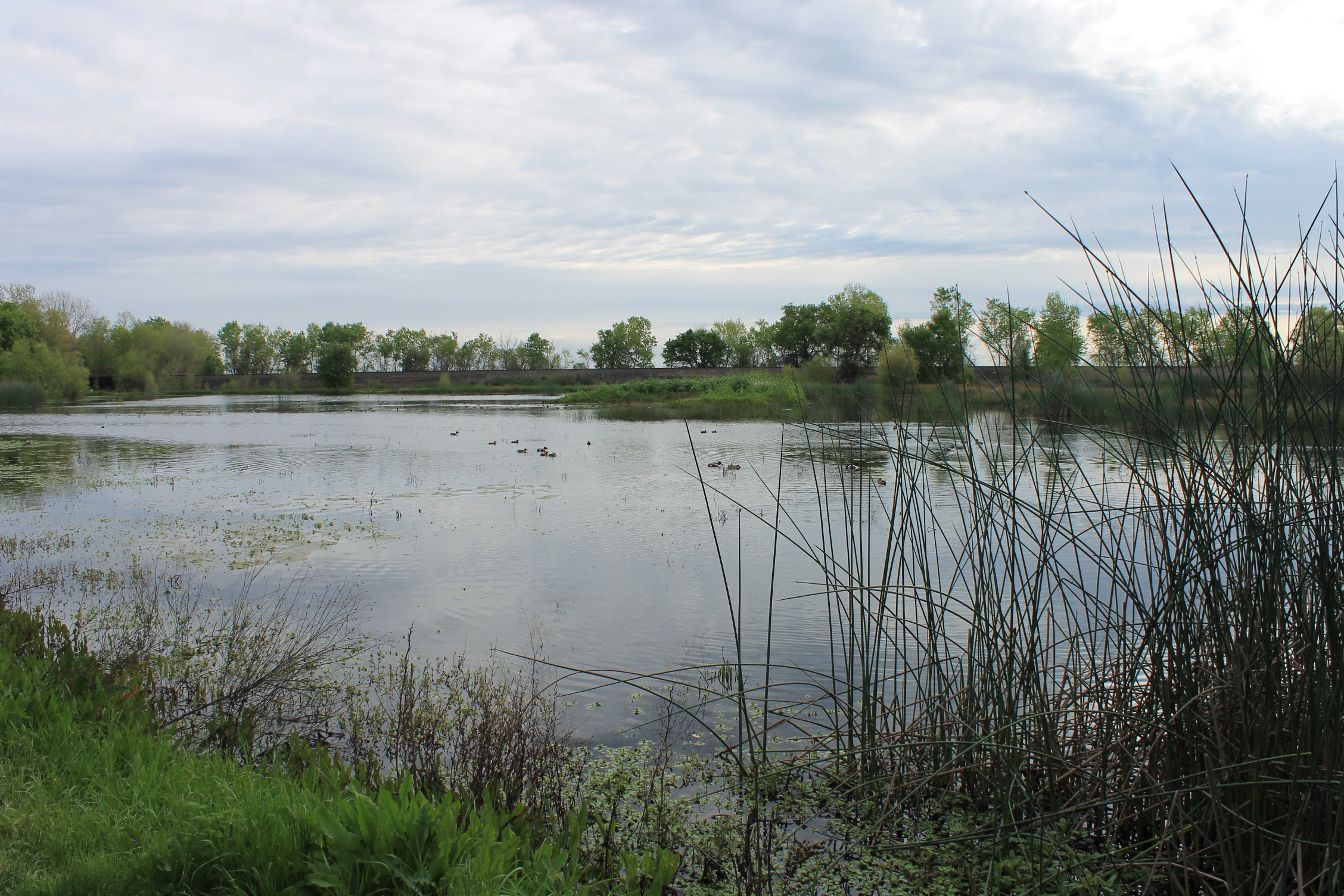
Back in March I wrote about my visit to the Cosumnes River Preserve.  While there, I met a few white herons — a creature that plays a critical role in one of my works in progress — The Irrepairable Past.  I suggested it was an omen, that it was time to return to a story I had placed on the back burner and had struggled with for quite some time. 

Unfortunately, I took that omen, read what I had written so far, and couldn’t figure out how to proceed.  So, I went back to Northville Five and Dime, finished it, and then started in on part two of the Northville saga.

Fast forward to yesterday, with Northville now also finding that all too common spot in my life where it’s a story I want to write, I know what I want to write (for the most part) and I find myself incapable of actually doing the writing.  I went back to the Cosumnes River Preserve yesterday.  Things have changed a bit.

In March…

IMG_3384

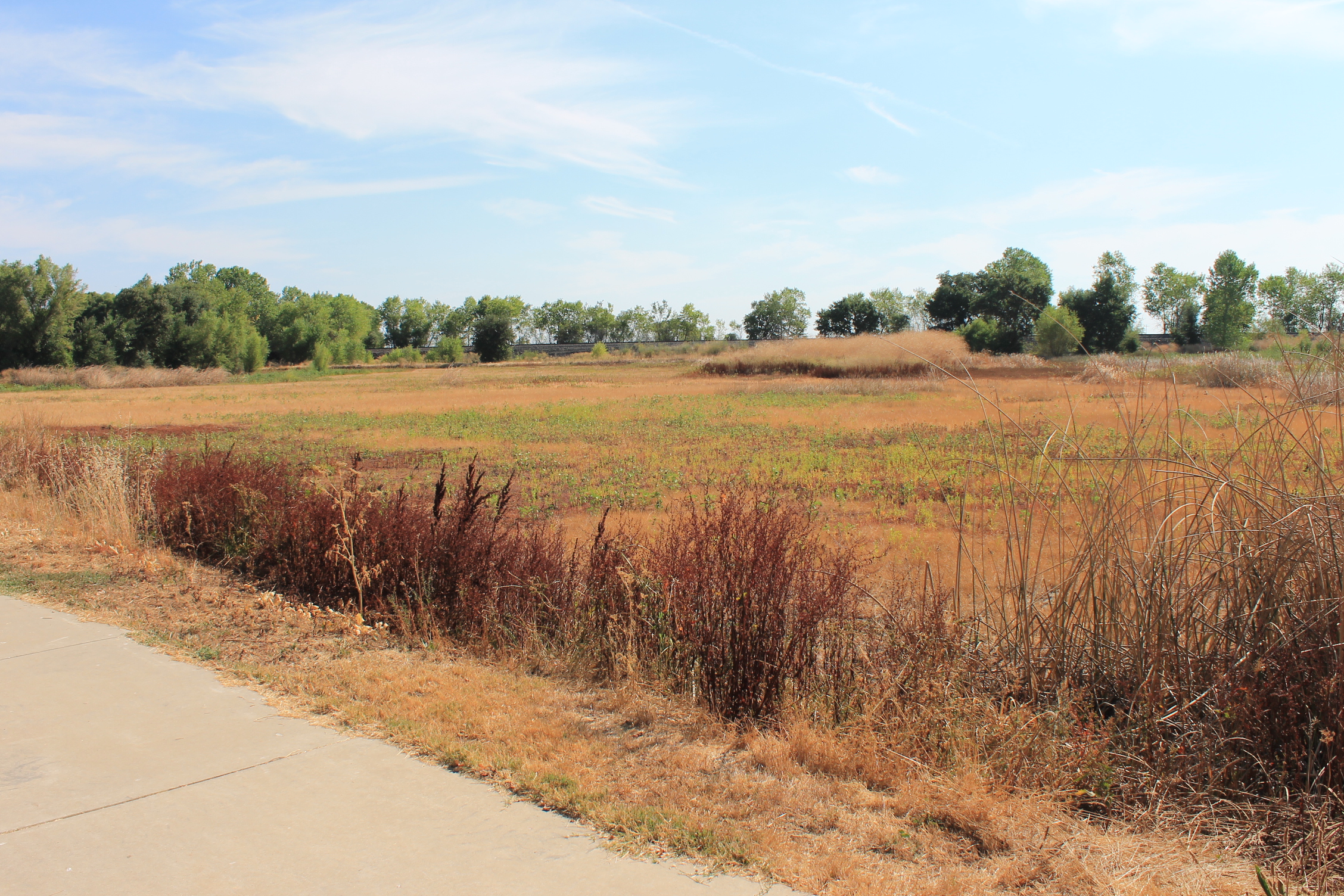
Four months later, in the heat of summer and in the midst of one of California’s worst droughts…

IMG_3484

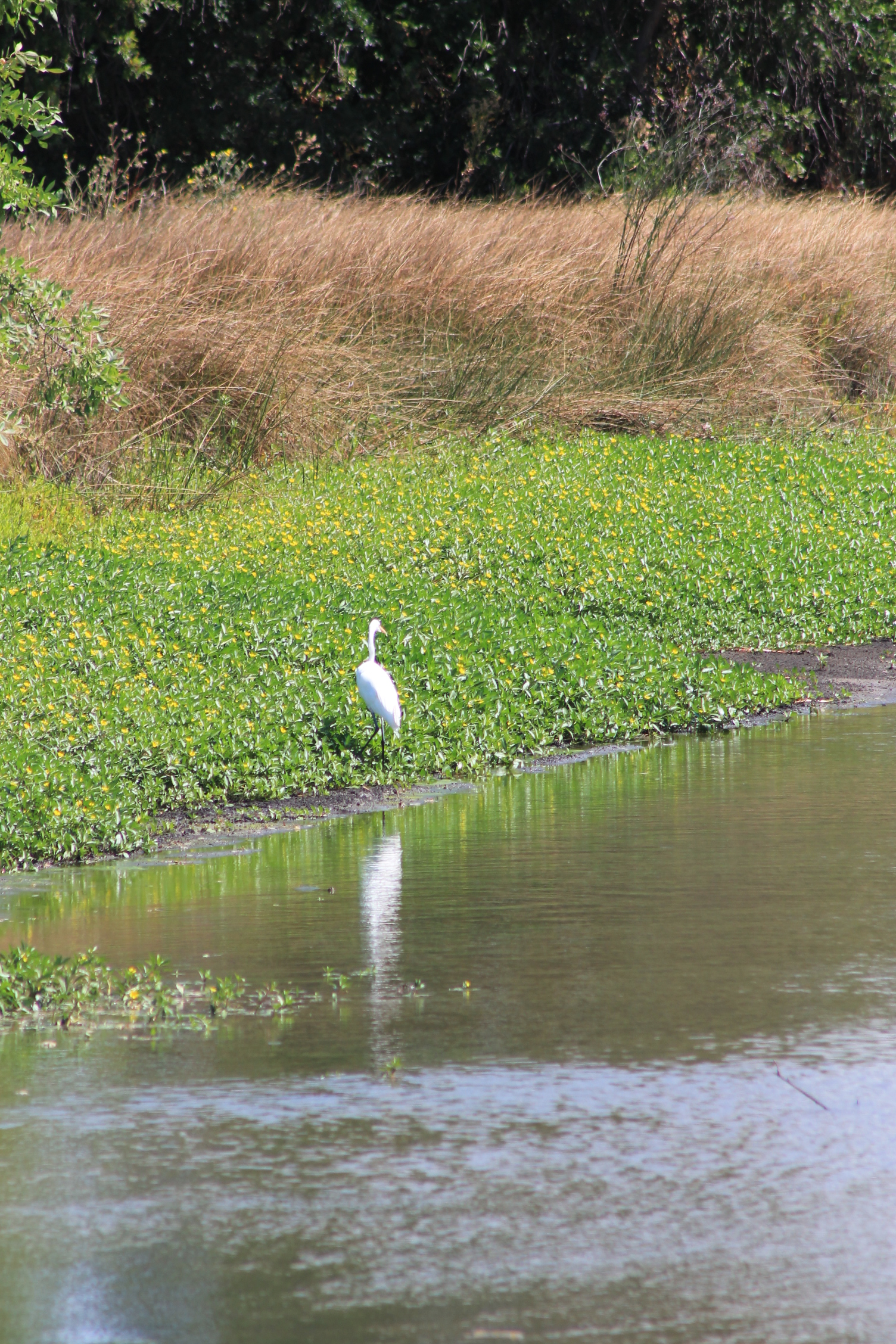
I was heartbroken.  No ducks.  No birds.  Not much wildlife.  And, then I found him.  Bob’s still there.  And, yes, I insist on believing this is the same white heron as the one I saw four months ago and you can’t persuade me otherwise…

IMG_3490

Once again, I considered the possibility that this was an omen.  I really (REALLY) want to write this story and there’s so much of it that I have in my head.  I just have this difficulty transferring what’s in my head to words on the page.  Last night, I wrote a bit … a very small bit … on the story.

Today, via Zoe’s writing workshop, I made a small stride on a piece of the story.  Let’s see if this new motivation can carry me forward for a bit.

Here’s today’s contribution…

                When I left, my feet crunched on the gravel drive. When I returned, the tires of my Honda whispered on smooth cement. I slammed the car door, hoping to avoid surprise.

                Walking around the corner of the house I saw that my father’s vegetable garden had long ago returned to the surrounding wild, but that the three roses he had planted to honor his dead wife, dead son, and myself still bloomed in brilliant shades of reds and pinks and yellows. As a child, when he first told me the meaning of the three bushes, I cried that night at the thought I would soon be buried there too. I shuddered now at the thought that the famous Ray Thornton would beat me to a spot under the blooms. And then shuddered again. Why only three roses for a family of four? What did this say about how my father viewed our family? Was it him or me that he found lacking the worth for such an honor?

                I walked to the front of the house and stopped for a moment to take in Sullivan Bay. Winter had passed and with Spring, the shore was covered with wild flowers. A slight breeze rustled the leaves of the surrounding woods where I once had lobbed mud balls at the Nazis and one time my father joined me.

                Out on the water, several whooping cranes fed in the shallows, their white feathers showing bright against the darkening surface of the bay. The sun was setting, sending brilliant shreds of orange and pink, transitioning into purple, through the thin layer of clouds. It was the first time I had really stopped and stared at a sunset over Sullivan Bay. It would not be the last.

                Putting it off no more I proceeded around to the porch and the steps leading to the front door. The easel was gone, but the rocking chair remained. My father sat in the chair, shrouded in blankets, the sunset casting an eerie glow on his face.

                My last memory of him when I threw the keys on the table and walked out was of a man built of flesh and blood. His arms resting on the table. A knife in one hand, a fork in the other. And an expression of disdain that had filled the last few years. More than thirty years later, like the faint and last “hello” of an echo reverberating over Sullivan Bay, he was just about gone, a shadowy, ephemeral version of the man I once knew.

                I felt like I could see through is body to the back of his chair. The slats going through like the sounds of nature lapping over that last hello.

                “Henry?” he whispered, his rheumy eyes trying to focus on me.

                I stopped and stood on the top step. “Father.”

                He coughed once and then again. “Why are you here?”

                “Doctor Miller called me. He said you don’t have much time.”

                “Look.” He pointed to the bay and I turned to watch the cranes take off, flapping their wings gracefully and then soaring with wings outstretched as they circled once and then took off towards the sun. “Why are you here?” he asked again.

                I didn’t answer. Instead, I went into the house and put my things in the spare room, where I had lived my final years as a child in my father’s house. It had barely changed.

                In the days that followed we barely spoke to each other. On the third day, the doctor dame to check on my father.

                “I’d give him a few weeks, maybe a month or two at most. The cancer has spread. Everywhere.”

                “Thanks, Doc. What can I do?”

                “Just keep him comfortable. I’ve left some pills for the pain.” The doctor looked at me with sad eyes. “Give him however much he wants.”

                “Sure.” I scratched my chin and looked at the water, where the cranes once again fed. “The thing is, as long as he has this to look at, I don’t think he’ll need the meds.”

                “I have some of his paintings in my office. He was quite talented.”

                “Doesn’t everybody?”

                The answer to that question was “no.” I had never purchased one of my father’s paintings of the bay and he never offered me one. And I had already confirmed that he did not own a copy of any of my books.

                Doctor Miller left and two days later it began.

                “I’m sorry,” he muttered late one night as we sat on the porch. I was writing and thought he had fallen asleep.

                “What?”

                “I’m sorry.”

Posted in Uncategorized | Tagged , , , , | 8 Comments

The Thunder Had Gone

Hey look it’s a short story!!!  (I’ll explain where this story came from at the end.)


THE THUNDER HAD GONE

1

Kate swallowed the square before anyone could see her do it. She went for another one and chewed it slowly, all the while working on the one she had stuffed in her mouth. She was bare foot. Seemed like she could feel the residue from yesterday’s steam cleaning. Her guests wouldn’t know. They were all wearing shoes and assuming the carpet always looked and smelled so fresh. If they only knew.

“You’re Angel’s mom?” Kate nodded. The woman was fifty, maybe more, and had on a red dress that came with its own cleavage. Her heels were sticking to the carpet, leaving little dents all over where the freshly cleaned carpet had only hours before been smooth and untouched. She swallowed some champagne. “Tell me, why did you name her ‘Angel’? That’s a unique name.”

“It has a precedent.”

“Oh. That’s funny.” The woman looked around, her eyes flitting about everywhere but on Kate’s face. “When did your husband pass?”

“He didn’t.”

“Oh. Well, that’s not so funny. What happened to him?”

Kate explained. Clearly, this woman wasn’t from Barrie’s side of the family. She explained in time that she was married to one of Barrie’s cousins.

“Nice house,” she said. “Won’t you come over and have a drink with us?” She was actually looking at Kate now, instead of straightening her hair or showing concern for the relative exposure of her very handsome bosom. Kate tried not to look at that bosom, and failed. She blushed. “Saw you standing alone. It’s your party, isn’t it? Why not enjoy it?”

“It’s Angel’s party. But thank you.”

The woman – Veronica – touched her hand and smiled. Then she went for another champagne.

Kate stayed in the corner, concerned for the well-being of her carpet and the lack of cleavage that she was able to expose from behind a dress that would have had nothing to do with cleavage if it had been ripped from top to bottom and made transparent. Around the great room, guests milled, and more entered all the time. Angel was at the doorway, greeting them. A few came over and said hi to Kate, but not many. These were Barrie’s relatives, and they had come here for Angel’s wedding. Still, it was funny how the spot of silence in the corner that Kate occupied managed to contract on her, the one place where light would not go and the laughter in the room had no reason to be.

She picked up another square and took it down in a single bite.

“Mom!” came Angel’s voice. “Those are bad for you.”

“Harumph,” replied Kate, chewing madly.

“Have some juice,” said Angel, handing over her glass. “Mom, this is my fiancé Mark. Mark, my mom.” Angel had her hand on Mark’s back and pushed him forward, bringing him within inches of his future mother-in-law. He smiled at her but found no words to cross the short distance. Instead of the routine “Nice to meet you,” all he could think of was whether she would turn out to be nice or mean, a bitch or a saint, or something altogether unexpected. He did his best and smiled again, afraid of how the jumbled words in his head might come out if he spoke, he opted for silently reaching out to shake her hand.

“Harumph,” said Kate, lips upturned at the taste of orange juice mixing with thick caramel. She started to choke on a nut. “I mean shit… sorry. Mark, nice to meet you. I’m Kate.” She extended a hand, and finally looked up from the carpet.

Angel spun away to greet new visitors.

Mark was at least four inches taller than Barrie had been, and Barrie had been a tall one. He was wearing a blazer. His handshake was crushing, and his eyes petrified with the fear of meeting the mother of his future bride.

“Call you Kate?” asked Mark.

“Mrs. Januskiewicz might be a mouthful.”

He glanced at the room. “Your husband has a lot of family.”

“The Smithsons are very tight-knit. You’ll figure it out. Stop being so nervous.”

“Can you introduce me to some of them?”

“No. I don’t know them well. They liked Barrie and they love Angel, but I’m a Januskiewicz, the very first of my kind in this family. You’re on your own.” As Kate talked with him, the fear faded away, as she knew it would – replaced with questions about this greying lady in the cheap blue dress and the bare feet, the one with a smudge of caramel on her nose.

“So are you, it seems,” he replied, surveying her little corner next to the dessert table.

“Have fun,” she said, giving him a little push towards the party. At once, people pounced on him, patting him on the back as several hands tried to give him a drink at the same time.

Kate ducked back into the corner. When she was sure no one was looking, she took another square and put it in her mouth. Then she picked up a second one and started chewing on it very, very slowly.

2

When he was a child his father told Mark that he should always look a person in the eye when introduced for the first time. And repeat their name – as in, “nice to meet you, Ms. Smithson.” It went without saying that a solid hand shake should accompany the greeting and a hearty laugh at the first opportunity.

Of course, that Mark’s parents abandoned him for a New Age retreat deep in the mountains of Northern California just as he started college — a retreat where he had no doubt his father never had to shake somebody’s hand, whether firmly or as limp as a fish, which required the loss of all worldly possessions, and which likely involved frequent trips down the cannabis highway – went a long way to explain how Mark found himself where he was. Dressed in faux clothes purchased with his 30% off coupon from Kohl’s and trying to figure out how to relate to a bunch of botox-injected, Nordstrom’s clad country clubbers.

Like the woman who was standing in front of him. Her hair was plastic platinum, her face a frozen mask. “Honey, this is Georgia. She was my babysitter when I was little.”

Georgia placed her hand on Mark’s arm and peered up at him. “You’re quite the lucky man, Mark. Angel is an incredible young lady.”

“Oh, yes, I agree. It’s like I found the golden ticket.” He couldn’t help it. Whenever the name Georgia reminded him of the name Georgina which took him to Willy Wonka and Charlie’s Grandpa George and Grandma Georgina. Before long, he was singing the Oompa-Loompa song in his head, Georgia and Angel were looking at him with their eye brows raised, and Kate was at his elbow.

“I love that story,” Kate laughed.

“Mother . . .” Angel whispered.

“Oh, please, dear. It was a harmless movie. Why don’t you go make sure the food is ready for everybody to sit down.” She looked around the crowded house and peered through the open doors that led to the back yard where more crowds gathered. “Well, I guess a sit down dinner isn’t quite right.”

Angel sighed and stomped into the kitchen. Georgia faded away and it was just Kate and Mark again. “She hated it, you know?”

“What?” Mark had lost track already, lost in the look Kate gave him. The one that said that she knew something about him he didn’t even know about himself. It was the way her lips curled up and her eyes gleamed and Mark knew that he would have no secrets with his mother-in-law and that she wasn’t a bitch or a saint. She was going to be that something other.

“Willy Wonka. Angel hated the movie. I think Veruca Salt hit a little too close to home.”

“Veruca? Salt?”

“Yes. The spoiled brat.”

“Oh yeah. She wanted a Golden Goose . . . and she wanted it NOW!”

They began to laugh and for a split second Kate leaned into Mark, resting her head against his shoulder. Just as quickly, she backed away and looked down. “I should go help Angel. Must keep the guests happy,” she said with a wink.

Mark watched her walk away and thought a thing he shouldn’t have. Her hips slid in her loose dress and her calves were muscled and firm. He noticed for the first time that she was barefoot.

He went for a beer, ditching the glass of wine Angel had handed him moments before.

3

Kate swallowed three of the French fries and stared at the platter. She ate three more. They were burning hot, freshly-liberated from the cooking oil that one of the guests had brought from Malaysia. The fries tasted like diesel fuel, but that didn’t stop her from eating a few more before taking the platter to the dining room.

Angel was speaking to Barrie’s three sisters, pouring them wine as she told them stories about her trip to Denmark. Uncle Reggie was sitting at the end of the table, drinking Drambuie. One after another glass-full of the stuff vanished into his throat, washed down with the occasional green bean or more often, a pat of butter that he pretended to apply to his asparagus. He smiled broadly, listening to Angel’s stories, smiling as though he knew what she was talking about, as though he had been on the same trip a long time ago and was remembering it through her. Occasionally, his eyes rested on her breasts and stayed there until they dropped a bit further and found the Drambuie again.

“Delicious,” lied Mark, eating a few of the fries.

“You look like you’re enjoying them,” lied Kate, right back. “Ready for the rehearsal tomorrow?”

“Why are so many people coming to the rehearsal? Why does it have to be so formal? Who ever heard of a formal dinner after a wedding rehearsal?”

“Drink up,” said Kate, pouring him some wine. “Welcome to clan Smithson. You really don’t know what you’ve got yourself into.”

“I’m sure it will be OK. I love your daughter, Kate.”

“Yes, I’m sure you do.” Kate reached out and patted his hand. “And if you think that’s all it will take to get through life and ward the Smithsons away from you, maybe we should talk some more.”

“What . . .”

Kate interrupted him before he could continue. “I’m sorry. Please forget what I just said. I’m just a tad bit bitter about the whole family. They’re all . . . just . . . I’ve . . . never felt . . .” She stopped talking and wiped at her eyes, looking at Mark as her face heated.

“What’s your job on Saturday?” he asked.

“Let’s see,” she said, picking at the guacamole. “Dress conservatively. Look dour. Tear up but don’t shed any liquids. Try not to yawn or soil my thong.”

“Wedding thong?”

“Best kind. You don’t speak much.”

“Only to you, it seems. Wanted to ask you about your husband…”

“Barrie.”

“Do you ever visit him?”

“No.”

Mark waited for more. Uncle Reggie was laughing hard. There was something coming out of his nose that one of the sisters pointed out.

Kate held the boy’s stare for a while, before finally saying, “She doesn’t want kids, you know. And she’s spoiled rotten. Always has been. But she’s my girl. She’s my girl.”

“We’ve had the kid talk. And we’ve had the spoiled brat talk too. I heard Barrie’s in a hospital not far from here, do you want to come with us to see him?”

“More ribs?” she smiled. But he wasn’t playing anymore; he was serious, no matter how much wine she’d fed him or how horrible the food was. “The dessert’s going to be worse,” she muttered, but he didn’t flinch. “No, I’m not going with you. Before he got sick and went all catatonic, Barrie was going to divorce me. He had some girlfriends. Rich lawyer’s girlies. Know the type?” She let that sink in. “You want to know why I can’t stand this? The Smithsons were high on him dumping me. But then his liver went rancid, and his brain afterwards. You can’t divorce someone when you’re a vegetable. It’s a law. I checked. And they’re all here for Angel. No, I don’t begrudge her that. She’s theirs just as much as she’s mine and she deserves this – all of it.” As she said the final words, she glared at him, the light from the candles reflecting off a dark coldness in her eyes.

Mark was sweating. He looked at Angel, a quick gaze that Kate supposed was meant to ask her about all the things she hadn’t told him: how she’d ended up here, a single child with a father in the hospital and a mother who blended in with flowery wallpaper she refused to give up. But to Kate, the paper on the walls smelled like Barrie, his cigars and scotches, the only memory she wanted of him, the only one that made sense to keep.

“I want kids,” he said, finally. He chugged his beer and asked for some wine.

“That’s a problem then. We’ll make this glass a big one, okay?”

“Yes ma’am. Join me?” he said, looking at her with wide eyes on the verge of contracting with his drunkenness. She wondered what his smell would be one day, what scent he would leave behind that her daughter would want to keep.

“Sure,” she said, and poured herself some. She chugged it down and took another as his eyebrows shot up. “I was kidding, by the way.”

“About what?”

“The thong. I wasn’t planning on wearing underwear.”

For the first time all night, Mark smiled.

4

The rehearsal had gone as it must. Nobody taking it seriously, the best man arriving stoned, Angel nervous and laughing. The preacher, who had baptized Angel twenty-six years before, whose cheeks offered a patchwork of burst capillaries that would distract Mark the next morning, and who kept looking at Georgia with a most unholy leer, presided over the event with indifference.

When Angel and Mark met with him for the obligatory pre-marriage counseling, every difference was glossed over. Instead, he emphasized their commonalities. “But, you two kids are in love and have a life ahead of you,” he said more than once. He didn’t ask about their plans for children. Or notice Mark’s grimace when Angel mentioned moving to the Pacific Northwest. “Be sure to never go to bed angry. Talk. Communicate.”

Mark left the last session convinced that the right Reverend McAllister had no idea what either he or Angel had said, instead speaking from a memorized script that was no different from the hundreds of other couples he had “counselled.”

“Well, that was a waste of time,” he offered to Angel as they walked out of the church.

“Really? I thought it was great.” Angel giggled. “I think he agrees we should move.”

Kate spent the rehearsal in one of the pews, whispering into her phone – directions to the caterer back at the house; instructions for the DJ who was setting up on the veranda; and managing the last minute details Angel had forgotten. She barely paid attention to the walk-through, but when it was done, she was there.

“Ready for the big day?”

“Of course.”

“It’s like you’re about to find the secret to the Everlasting Gobstopper?”

“What? Oh, right, Willy Wonka.” Mark looked at the crowd that was leaving the church ahead of them. “I guess so. A marriage and a piece of candy that never goes away. Any chance Barrie can make it tomorrow?”

“No,” Kate replied, frost dripping from her tongue. “No. He most certainly will not be here.”

“Sorry.”

“You shouldn’t be. I’m not.”

They reached the door and stepped outside. With the wind whipping through the trees and blowing leaves across the grass Kate shivered in her thin dress. “Here.” Mark held his jacket to her and she put it on. By the time they got to the car, Kate knew what his smell was. Old leather and mint gum.

“Keep the jacket.”

“Hurry along to my daughter. She’s waiting.”

“She is.”

He smiled at her. She dipped her face down and smiled back.

5

Kate stood in the rain. There were people in her house. Three times, she’d tried to go in, but there had been people in the entranceway, pulling off their coats but not their shoes. Now they were inside her house, sloshing about the carpet, expecting dinner, drinks, and celebration of the next day’s events

She stood in the rain. Lightning visited, and thunder wrapped its presents. Water drizzled down her hair and crawled up her feet, soaking the bottom of her dress. She could have gone in through the back door. She could have rang the doorbell or tried the garage. She should have gone in, because the house was alive and the music was loud, and it was her house. It was her house. But no one had come to look for her, some lowly immigrant Januskiewicz who had married above her place and narrowly avoided a ruinous divorce by virtue of a couple of ill-timed over-the-counter drugs that her cheating husband had popped late one Friday night while watching horror movies. No one had come to look for her, and no one would, and no one inside would even know that she was not there, not even the daughter for whom this party had been organized.

She stayed off to the side, under a tree sure to attract the lightning. Out of the light, she stared at the windows.

“Drambuie,” came a voice. Mark skidded to a stop under the tree, bottle in hand. “Sweet mother, where have you been all my life?” he laughed. He took a long drink and handed her the bottle.

She drank. “You should go back in. You should also stop drinking. Tomorrow’s the wedding.”

“Yes it is. Yes it is,” he confirmed. He took another drink. “But I put in my time. And I kept trying to get to Angel in the center of it all, but there was some kind of force in there pushing me to the sides. Every time I tried to go in, it grabbed me and sent me to the walls. You know what I mean? Good thing I found the bar. I left an hour ago. I’ve been out back. No one noticed.”

Kate took another drink. “You’re talking a lot more now.” Then another. This was a night of lightning. It would come, and she would duck as though it had targeted her. But she remained alive and whole, soaking wet under a tree in the middle of the night as the cars roared past, spraying water onto her lawn. “Maybe you should stop.”

“I’m not sure I should. I’m afraid of what might happen if I stop talking to you. The silence, you know. What would fill it?” He took the bottle from her and drank deeply. “You know, that force that kept pushing me to the sides in there, that’s the Smithson thing, isn’t it?”

“Maybe it’s the Januskiewicz thing.”

She found herself next to him. Pressed against him. Then she found herself in his arms. Why wouldn’t she have? Didn’t she know this was what would happen the moment she opened herself to him and he didn’t run? Didn’t he know it, too? She had seen it in his eyes, in the curve of his lips, in the hesitation in his words. He was lost, too, and what do two lost people do when they bump into each other? They find themselves or flee.

Lightning came, and she kept waiting for the thunder to follow. But he held her as though he meant it. He didn’t run. As though he wanted to keep her dry, to keep the sound of the cataclysm that was tearing the sky apart away from her, he swallowed her in his arms.

He tasted like alcohol. She didn’t care. “I’m not going back in,” he moaned, and then repeated it as she opened him up and splayed him against the tree. She inhaled him. His smell changed from old leather and mint gum to animal heat and longing. Acids and electricity were all she could sense as she felt water on her body, every part of her, desperate fingers reaching for answers and warm things that they were not entitled to, not allowed to have under the rain or on any other day. But desperate they were, and found the way through to some spot against the roots of the tree, in the full force of the mud and the strangest sensation that they might sink, might vanish, if they kept going. Lightning came. But there was no thunder. Lightning came, without thunder. And he kept telling her that he was not going to go back in, to that light, that there was nothing there for him; and she answered him with her lips and her hands until he had nothing left to say, nothing to do except lie beneath her and see her in the flashes that continued to rip apart the heavens.

The music inside the house grew louder. She could hear voices. But he only heard hers. And for each love and grief she could conceive, she took every part of him, every thought too, including all the suggestions that said this was wrong, or that something like morality or family or anything of the kind could get in the way of a moment like this, there under the tree with the lightning splashing its own concert lights on shadows no one else could see.

6

How do you go back in when you said you never would? Mark did it because he had to and where he didn’t think anything else could rip inside, another rip formed and threatened to split him apart. And then he got through the wedding the next day, even though he could still feel the mud and rain mingling in his clothes and feel the skin of his mother-in-law under his hands and her mouth on his and what it all felt like. It was all right there, bursting in his head throughout the whole god damn thing.

And he said “I do,” at the right moment, and smiled and kissed the bride. Maybe she didn’t notice how he pulled back from the kiss and how tentative it was. Maybe she didn’t. But he felt like it was obvious.

And the reception flew by in a profound quiet in which he didn’t hear the music, or the toasts, or anything else other than the thunder that boomed outside and with every flash of lightning that rebounded through the dining room, he saw the wet strands of Kate’s hair hanging over his face and felt her lips on his.

And he looked at Angel and thought how beautiful she was and how lucky he was. Or should be. Or, maybe not. He realized there was something just not quite real about the whole thing. About the Smithsons and their clan and he started to think he never really had a conversation with Angel, one that went beyond the standard catch phrases and slogans. Maybe there was a reason she liked the preacher and he didn’t. Mark had entered a plastic world he wanted nothing to do with. He preferred bare feet. And oompa-loompas.

And so he wondered. What would it be like in ten years or twenty? Will she have botox’d her cheeks and puffed up her cleavage. Will she call people “dear” and talk about afternoons at the country club. Will it be considered a part of the whole thing that she will have affairs and so will he. But is it OK if that affair is with her mother? Or would that be just a bit too close?

And even though she doesn’t want kids, she’ll have one any way. For him, of course. And it will be apparent in the years that follow that she meant it.

And then he saw Kate. Sitting at a table in the corner, while others were dancing and milling about, she was alone. Drinking a glass of wine. She looked fresher and younger than she had the last couple of days. And Mark thought that he did that to her. Brought her back to life.

And then he’s there. And the lightning flashes and the thunder booms. He’s sitting next to her, but he’s not. He can’t. In the hours of the day that followed the night, he cannot go to her. He is married now. To her daughter and how can he explain that. What doesn’t need to be explained because she knows it. Of course, she knows it, but still there is something that could be explained, isn’t there?

That he loves her. And it doesn’t make any sense. But he does. In a way that he never thought possible. Earthy and real and deep.

And when the party is over and the last guests have left, he makes love to his wife. The thunder had gone, the lightning with it.

-END-

Trent Lewin suggested that we could try co-writing a story together.  I jumped at the chance, scared shitless at the idea, because Trent is an amazing writer.  He posts short stories on his blog.  Stories that frequently leave me stunned and amazed and begging for more.  He is an artist with words.

I thought that what he meant was that he would write the opening piece of a story.  I would write the next piece and then we would alternate as the story went along.  A couple of weeks after he made the suggestion, his contribution showed up in my in-box.  He had already written his three alternating pieces, inviting me to fill in the gaps.  OK.  It wasn’t quite what I had in mind.  I struggled with it for a bit because I kept wanting to go places that were cut off by the subsequent pieces he had already written.  Then, I finally figured it out and what is above is the result.

Parts 1, 3, and 5 are almost entirely Trent.  I did some minor tweaking to avoid continuity problems with what I contributed to the story.  Parts 2, 4 and 6 are entirely me.  Question is … could you tell that two different writers wrote this?
 

Posted in Uncategorized | Tagged , , | 27 Comments

Was My Year A Success

For a long time I have felt like I’m not writing enough.  Yesterday, I realized it may be that I’m being too hard on myself.

About a year ago, I wrote a short story called Northville Five & Dime.  I’m going to use that as my marker for a year.  Since then, that short story has turned into a relatively completely 30,000 word novella.  I also write the 15,000 word short story Deviation.  I started a horror story and wrote about 4,000 words on that.  I started and wrote over 10,000 words on a top secret project.  I also have written a number of short stories that probably total around 15,000 – 20,000 words.

Add it all up and it comes to 74,000 – 79,000 words written over the past year.  That’s not bad.  Why do I feel like I haven’t done anything?  I think it’s that completion thing.  It is that there are other works that I have started and stopped and not been able to finish.  That even though I have “completed” Deviation and Northville, I haven’t yet decided what to do with them.  That’s where my dissatisfaction lies.  But I should be happy with what I’ve done.  So, here’s to me!!


Posted in Uncategorized | Tagged | 15 Comments

My Writing Process

Why Do I Write What I Do

The simple answer is … because it’s what in my head.  The hard answer …

I really don’t know.  I write the stories that are in my head.

Okay this isn’t working.  I don’t write non-fiction because, generally speaking, I simply don’t know how to write a true story.  So, I write fiction.  Sometimes, my ideas are novel-length.  Sometimes they are worth 500 words, or 1,000, or 10,000.  That’s one of the things I’ve yet to figure out — what defines the length of the story.  But, why do I write what I write?  As in the genre?

Well, one thing to say is that I don’t think I necessarily fit a genre.  To the extent I do, it’s just something like mainstream or contemporary fiction.  Or maybe every now and then literary fiction.  I generally do everything I can to stay away from a genre though because I really don’t want to write the same type of thing.  I don’t want to be a Dean Koontz or a Nicholas Sparks or a Danielle Steele.  The idea of writing the same type of story over and over again bores me.  Where’s the challenge in that?

To the extent I have ever tried to answer the question “what is your genre” my response has typically been that I write slice of life stories.  They are, for the most part, about real people experiencing real dilemmas and finding something on the other side of those dilemmas.

That, however, doesn’t necessarily answer the question of why.  For instance, why don’t I write science fiction or horror or crime novels?  And, other than repeating that I really don’t want to be stuck in a genre, I can’t answer the question.  These are the things that come to me when I crack open my head and the first shadows of a story begin to form.  A person in love with somebody they don’t even know yet.  A husband struggling with an unhappy marriage.  An old man living alone, wallowing in his memories and the damage his life has caused.  An arranged marriage.  A boy who has grown into a man still struggling with his brother’s death in Vietnam.

I don’t know why.  I just know these are the ideas that form in the recesses of my head.

How Does My Work Differ From Others Of Its Genre

This assumes I have a genre, an assumption I’m not willing to accept.  I think, however, that the biggest difference between my stories and those that might be classified in the same “genre” is that I write about normal people.  Far too many stories, even those that I might consider to be within the same slice of life concept, is that the characters tend to be offbeat.  It seems that there always has to be characters who are just slightly odd.  And for some reason I’m challenged by the idea of odd when I write.  I desperately want to do odd, but it just doesn’t seem to be something that is in me, except in extremely rare circumstances.  Maybe that’s my genre … normal life.

How Does Your Writing Process Work

I write slowly.  I edit as I write so that my first draft is typically very close to my final draft.  In fact, there is typically very little that changes between first and final drafts.  I wish I could write the way many people do — churning out a couple of thousand words a day.  But I simply can’t.  First there is the time issue created by working and family and life.  But, there also is the fact that a significant part of the writing process for me is mental.  I think about my stories, I ponder them, I think about this and that, and gradually the words come out when I find the time to open my laptop.  But it’s typically slow and deliberate.

My first novel took one year to write and another year to completely rewrite.  Then it “sat” on the shelf for a couple of years before it went through two major edits that eliminated almost 25,000 words.

My second novel took two years to write and it was essentially final and complete at the end of that.

When I’ve written over the past 6-8 months, it has primarily been work on a 30,000 word novella that I finally completed a couple of weeks ago.  I also, during that time, completed a 15,000 word short story and wrote a few other shorter pieces.  These longer pieces are taking longer and longer these days as I work on refining what I produce.

One of the things I’m trying to do with my writing process now is to find different ways to tell a story.  The 30,000 word novella is told in the first person from the perspective of three different characters.  The 15,000 word short story is told entirely in dialogue.

What Am I Working On

That’s the $64,000 question at the moment.  The Irrepairable Past is my half completed novel (at almost 30,000 words now) about that old man who lives alone, wallowing in the misery of his past.  I’m toying with the idea of taking my 30,000 word novella, Northville Five & Dime, and writing two more and turning it into a trilogy targeted at the YA market.  I believe I’m going back to Irrepairable, but every time I think about it — which is several times a day, I don’t get how I can get back into it.  I know what I want and need to write on the couple of chapters that are started, but not yet completed.  I know what the other two chapters are going to be about in general terms.  But when it comes to how I actually start typing the words again on this story I haven’t touched since last summer and which I started something like two years ago, I just don’t know how to.


This post was prompted by a post at midlifebloggers.com that was itself prompted by another blogger (linked to on midlifebloggers.com) who started a “blog tour” on the topics contained herein.  Check them out … add your own take on these.  What’s your writing process?


Posted in Uncategorized | Tagged , | 8 Comments